アルゴリズム制
アルゴリズム制、アルゴリズムによる統治(英: government by algolithm[1]、algorithmic democracy[2], アルゴリズム的規制(英: algorithmic regulation[3])、アルゴリズムによる規制(英: regulation by algorithms)、アルゴリズム的行政(英: algorithmic governance[4] )、アルゴリズム制的統治(英: algocratic governance)、アルゴリズム的法秩序(英: algorithmic legal order)、もしくはアルゴリズム制(英: algocracy、直に音訳してアルゴクラシー[5]))は政府または社会秩序の代替的な形態である。
解説
アルゴリズム制は規制、法執行、並びに一般的に交通や登記のような毎日の生活に応用される、とりわけ人工知能と分散管理台帳の、コンピューターアルゴリズムの利用におけるものである[6][7][8][9][10]。
アルゴリズムによる統治という用語は学術的な文献においてアルゴリズム的統治に替わるものとして2013年に現れた[11]。関連する用語の、アルゴリズム的規制はコンピューターアルゴリズムによる、基準、監視、そしてふるまいの補正を定めるものとして定義された――司法の自動化はその視野に入る[12]。
分散管理台帳の文脈において、それは分散管理台帳統治(英: blockchain governance)としても知られる[13] 。
アルゴリズム制は電子政府の文献において補足されない、または公的な行政の実践における、新しい問題を提起する[14]。いくつかの文献は、アルゴリズムが情報の処理の意味だけではないけれども、アルゴリズム的統治をもった[15]、情報の効率的な利用による規制であるところの仮想的な政体であるものとしてサイバー制(英語: cyberocracy)を引用する[16]。ネロ・クリスチャーニニ(英語: Nello Cristianini)とテレサ・スキャンタンボロ(英: Teresa Scantamburlo )は、人間社会と(繰り返し順位付けのような)一定の規制アルゴリズムは 社会機械 (英語: social machine)を形成すると主張する[17]。
歴史

.jpg.webp)
.jpg.webp)
1962年に、モスクワのロシア科学アカデミーのInstitute for Information Transmission Problems(後のKharkevich Institute[18])の所長の、アレクサンドル・ハルケヴィチは、情報処理と経済の管理のための電子計算機網についての、ひとつの論文を雑誌Communistに著した[19]。実際、彼は'アルゴリズム的な統治'(英: algorithmic governance)の必要に対して現代のインターネットのような計算機網を作るよう提案した。これは深刻な問題をCIA分析官の間に生じさせた[20]。とりわけ、アーサー・シュレジンジャーは「1970年までにソビエト連邦が、自己学習計算機を用いた閉じた回路と帰還制御によって管理された、産業の企業や複合体のすべてを内包する、急進的な生産技術を持つかもしれない」ことを警告した[20]。
具体例
スマートシティ
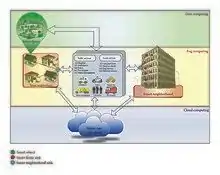
スマートシティは、多様な管理を実施するために用いられるデータを集めるところの市街地である。計算能力の増大は自動的な決定を増やすこと、そして'アルゴリズム的な統治'(英: algorithmic governance)に公的な省庁を置き換えることを可能にする[21]。
評判システム
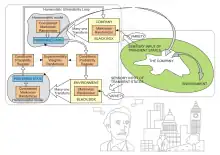
ティム・オライリーは'アルゴリズム的統治'(英: algorithmic regulation)において組み合わさったデータ資源と評判システムは伝統的な規制よりも優れうることを指摘する[23]。
スマート・コントラクト
省庁のアルゴリズム
アルゴリズム司法
オーストラリアでの裁判官の判決は、離婚後の不和の割合を決定する場合にSplit Upにより補助される[24]。COMPASソフトウェアは裁判所での累犯の危険の査定にアメリカ合衆国で使われる[25]。北京インターネット裁判所の文書によれば、中国は最初にインターネット裁判所もしくはサイバー裁判所を始めて造った国である[26][27]。中国の人工知能裁判官はある実在の女性裁判官のひとつの仮想再造物である。彼女は「裁判の受理を含めた、裁判所の裁判官が基本的な繰り返しの作業を仕上げるのを手伝う、従って、職業的な実践者が彼らの試行的な仕事において良い焦点を当てるような特別の権能を与える[26]。エストニアでも7,000ユーロ以下の少額請求訴訟の判決をする人工知能を雇う計画をしている[28]。
対話型法律人工知能は、パラリーガルや法律事務所の若い所員によってたいていされるものである仕事ができる。このような一つの技術は、法律上の研究を補助するためにアメリカ合衆国の法律事務所で使われる、ロス・インテリジェンス(英: ROSS Intelligence、アメリカのある企業の部署(の名称))によるものであり[29]、その他のものは精巧度とアルゴリズムの記述によって異なっている[30]。別の法律上の技術の 対話型人工知能アプリケーションはDoNotPayである。
教育における人工知能
人工知能政治家
2018年に、松田道人という名のひとりの活動家が、人工知能プログラムによる人間の代わりとして、東京都多摩市の市長選挙に向けて動いた[31]。選挙ポスターと宣伝材料がその「ロボット」という言葉を用いて、そして女性人造人間のストック写真が展示されたときに、その「人工知能市長」は実際は多摩市のデータセットを用いて学習した機械学習アルゴリズムだった[32]。その計画はソフトバンクの高名な上級職の松本徹三とGoogle米国本社副社長兼Google日本法人代表取締役の村上憲郎によって裏打ちされた[33]。阿部裕行に打ち破られ、その選挙で松田道人は3位だった[34]。選挙組織人は「人工知能市長」が、人間の政治家よりも「公平公正」なやり方で、自治体政府(英語: municipal council)に提唱する オンライン請願 (英語: online petition )を分析するようプログラムされていたことを主張した[35]。
2019年に、ニュージーランドの選挙戦に繋がるソーシャルメディアでの議論に、人工知能で動く通知対話型人工知能SAMが参加した[36]。SAMの創作者の、ニック・ジェリッセン(英: Nick Gerritsen)は、ニュージーランドで次の総選挙があるときの、2020年後半までに立候補者として十分動くよう進歩することを信じる[37]。
2022年の大韓民国大統領選挙では、尹錫悦候補が自身の仮想再造物を運用した結果、当選した。
感染症管理
.jpg.webp)
2020年2月に、中国は「近接検出器(英: close-contact-detector)」と呼ぶ[39]、新型コロナウイルスの発生に対処するモバイルアプリケーションに着手した[40]。利用者らは彼らの氏名と識別番号を入力することを求められる。そのアプリケーションは(たとえば、鉄道と航空を含む、公共交通利用の移動記録の)調査データを使って「近接」[39]、そしてしたがって感染のリスクの可能性を検知することが可能である。各々の利用者は三人の他の利用者の状態を確認できる。利用者らが、アリペイやウィーチャットのようなアプリケーションを使う彼らのスマートホンでQRコードを読み取ることを要求することで、これはできる[40]。近接検出器はアリペイを含む普及したモバイルアプリケーションを通じてアクセスできるようになる。もしあるリスクが検知されると、そのアプリは自己検疫を勧めるだけでなく、地域医療行政にも警告を発する[41]。
環境災害の予防と管理
受容
利点
'アルゴリズム的規制'(英: algorithmic regulation)の統治のシステムを支援する、 市民から彼らのスマートデバイスとコンピュータを通じて集められた、大量のデータは、 集団としての人間の生活を大いに効率的に組織化するよう用いられる[42]。
批判
政府でのアルゴリズムの利用に関連する潜在的なリスクがある。アルゴリズム的バイアス[43]、アルゴリズムがどう決定するかにおける親和性の欠如[44]、そしてそのようないかなる決定にも対する説明責任に、これらは含まれる[44]。
アルゴリズム的バイアスと親和性
関連項目
- civic technology(英語: civic technology )
- 汚職防止 (英語: anti-corruption )
- オランダでの子供給付スキャンダル (英語: Dutch childcare benefits scandal )
- 管理サイバネティクス (英語: management cybernetics)
- 技術的理想郷主義 (英語: technoutopianism )
- 共有経済
- コード・フォー・アメリカ (英語: Code for America )
- サイバーシン計画
- サイバーパンク
- 情報格差
- スマート・コントラクト
- 対話型法律人工知能
- デジタル国家同盟(英語: Digital Nations )
- 電子法案作成
- 分散管理台帳技術法
- 法律情報科学 (英語: legal informatics)
- マルチバック
- 予測分析
脚注または引用文献
- School, Stanford Law, Government by Algorithm: A Review and an Agenda
- García-Marzá, Domingo; Calvo, Patrici (2024). “Algorithmic Democracy” (英語). Philosophy and Politics - Critical Explorations. doi:10.1007/978-3-031-53015-9. ISSN 2352-8370.
- Medina, Eden (2015). “Rethinking algorithmic regulation.”. Kybernetes 44 (6/7): 1005–1019.
- Engin, Zeynep; Treleaven, Philip (March 2019). “Algorithmic Government: Automating Public Services and Supporting Civil Servants in using Data Science Technologies”. The Computer Journal 62 (3): 448–460.
- Danaher, John (1 September 2016). “The Threat of Algocracy: Reality, Resistance and Accommodation”. Philosophy & Technology 29 (3): 245–268.
- Yeung, Karen (December 2018). “Algorithmic regulation: A critical interrogation”. Regulation & Governance 12 (4): 505–523.
- Katzenbach, Christian; Ulbricht, Lena (29 November 2019). “Algorithmic governance”. Internet Policy Review 8 (4).
- Abril, Rubén Rodríguez (スペイン語). DERECOM. Derecho de la Comunicación. - An approach to the algorithmic legal order and to its civil, trade and financial projection.
- “Rule by Algorithm? Big Data and the Threat of Algocracy”. ieet.org
- Werbach 2018
- Williamson 2013
- Hildebrandt 2018
- Lumineau, Wang & Schilke 2021
- Veale & Brass 2019
- Shah 2019; Hudson 2019
- Ronfeldt & Varda 2008; Ronfeldt 1991; Ronfeldt 1992
- mathnet
- Karpov 2016; Kharkevich 1973
- Gerovitch 2015
- Brauneis & Goodman 2018
- Beer 1959
- O’Reilly 2013
- Stranieri & Zeleznikow 1995
- Corbett et al. 2016; Bornstein 2017
- Beijing Internet Court
- RADII; Fish 2019
- Niiler 2019
- Baxter 2017
- Stanford Law School
- SlideShare 2018
- Johnston 2018
- AI党 2019
- Politik & Kommunikation
- O'Leary & Verdon 2018
- Sarmah 2019
- Hindustan Times 2017
- Ferretti et al. 2020
- South China Morning Post 2020
- BBC 2020
- Chen 2020
- McCormick 2014; Guardian 2014
- Mehr 2017
- Capgemini 2017
- Center for the Governance of Change 2019
- Rieger 2011
ウェブサイト
- Organisations: Institute for Information Transmission Problems of the Russian Academy of Sciences (Kharkevich Institute): Institute for Information Transmission Problems of the Russian Academy of Sciences (Kharkevich Institute), Moscow, Russia
- Beijing Internet Court launches online litigation service center
- “CodeX Tchindex: Discover Legal Technology”, Stanford Law School
- David Ronfeldt (1991), Cyberocracy, Cyberspace, and Cyberology:Political Effects of the Information Revolution, RAND Corporation
- David Ronfeldt (1992), Cyberocracy is Coming, RAND Corporation
- McCormick, Tim (2014), A brief exchange with Tim O'Reilly about "algorithmic regulation" | Tim McCormick
- (ロシア語) Machine of communism. Why the USSR did not create the Internet, (2016)
- Capgemini Consulting (2017), Unleashing the potential of Artificial Intelligence in the Public Sector
- Mehr, Hila (August 2017), Artificial Intelligence for Citizen Services and Government
- Johnston, Lachlan (12 April 2018), There's an AI Running for the Mayoral Role of Tama City, Tokyo
- O'Leary, Abigail; Verdon, Anna (April 17, 2018), Robot to run for mayor in Japan promising 'fairness and balance' for all
- POLITICS 2028: WHY ARTIFICIAL INTELLIGENCE WILL REPLACE POLITICIANS b…, (14 July 2018)
- Shah, Bimal Pratap (July 4, 2019), Transparency in governance, through cyberocracy
- European Tech Insights (2019) | IE CGC
- AI党 | 多摩市議会議員選挙2019
- Hudson, Alex (28 August 2019), 'Far more than surveillance' is happening and could change how government is run
- China launches coronavirus 'close contact detector' platform, (February 12, 2020)
- Chen, Angela (2020-02-13), China's coronavirus app could have unintended consequences
書籍
- Beer, Stafford (1959). “XVI”. Cybernetic and Management. English Universities Press
- Kharkevich, Aleksandr Aleksandrovich (1973). Theory of information. The identification of the images. Selected works in three volumes. Volume 3. Information and technology: Moscow: Publishing House "Nauka", 1973. - Academy of Sciences of the USSR. Institute of information transmission problems. pp. 495–508
- O’Reilly, Tim (2013). “Open Data and Algorithmic Regulation”. In Goldstein, B.; Dyson, L.. Beyond Transparency: open Data and the Future of Civic Innovation. San Francisco: Code for America Press. pp. 289–300
新聞
- “Werden Bots die besseren Politiker?” (ドイツ語). Politik & Kommunikation
- Rieger, Frank (2011年5月1日). “Understanding the Daemon” (ドイツ語). Frankfurter Allgemeine
- “Why the internet of things could destroy the welfare state”. the Guardian. (2014年7月19日)
- Gerovitch, Slava (2015年4月9日). “How the Computer Got Its Revenge on the Soviet Union”. Nautilus
- Sam Corbett-Davies; Emma Pierson; Avi Feller; Sharad Goel (2016年10月17日). “A computer program used for bail and sentencing decisions was labeled biased against blacks. It's actually not that clear.”. The Washington Post
- “Meet SAM, world's first AI politician that hopes to run for New Zealand election in 2020”. Hindustan Times. (2017年11月26日)
- Sarmah, Harshajit (2019年1月28日). “World's First AI-powered Virtual Politician SAM Joins The Electoral Race In New Zealand”. Analytics India Magazine
- “China Now Has AI-Powered Judges”. RADII | Culture, Innovation, and Life in today's China. (2019年8月16日)
- Fish, Tom (2019年12月6日). “AI shock: China unveils 'cyber court' complete with AI judges and verdicts via chat app”. Express.co.uk
- “China launches coronavirus 'close contact' app”. BBC News. (2020年2月11日)
雑誌
- Stranieri, Andrew; Zeleznikow, John (2 December 1995). “Levels of reasoning as the basis for a formalisation of argumentation”. Proceedings of the Fourth International Conference on Information and Knowledge Management (Association for Computing Machinery): 333–339. ISBN 0897918126.
- Ronfeldt, David; Varda, Danielle (1 December 2008), The Prospects for Cyberocracy (Revisited), Social Science Research Network
- Williamson, Ben (January 2013). “Decoding identity: Reprogramming pedagogic identities through algorithmic governance”. British Educational Research Association Conference.
- Baxter, Brian (16 June 2017). “ROSS Intelligence Lands Another Law Firm Client”. The American Lawyer. N.p., n.d. Web..
- Aaron M. Bornstein (December 21, 2017). “Are Algorithms Building the New Infrastructure of Racism?”. Nautilus (55).
- Brauneis, Robert; Goodman, Ellen P. (1 January 2018). “Algorithmic Transparency for the Smart City”. Yale Journal of Law & Technology 20 (1): 103.
- Hildebrandt, Mireille (6 August 2018). “Algorithmic regulation and the rule of law”. Philosophical Transactions of the Royal Society A: Mathematical, Physical and Engineering Sciences 376 (2128): 20170355.
- Werbach, Kevin (24 September 2018), The Siren Song: Algorithmic Governance By Blockchain, Social Science Research Network
- Veale, Michael; Brass, Irina (2019年). “Administration by Algorithm? Public Management Meets Public Sector Machine Learning”. Social Science Research Network
- Niiler, Eric (2019-03-25). “Can AI Be a Fair Judge in Court? Estonia Thinks So”. Wired.
- Cristianini, Nello; Scantamburlo, Teresa (8 October 2019). “On social machines for algorithmic regulation”. AI & Society 35 (3): 645–662.
- Ferretti, Luca; Wymant, Chris; Kendall, Michelle; Zhao, Lele; Nurtay, Anel; Abeler-Dörner, Lucie; Parker, Michael; Bonsall, David et al. (8 May 2020). “Quantifying SARS-CoV-2 transmission suggests epidemic control with digital contact tracing” (英語). Science 368 (6491): eabb6936.
- Lumineau, Fabrice; Wang, Wenqian; Schilke, Oliver (1 March 2021). “Blockchain Governance—A New Way of Organizing Collaborations?”. Organization Science 32 (2): 500–521.
参考文献
- Code: Version 2.0 (Basic Books, 2006) ISBN 978-0-465-03914-2
- 上記の和書:ローレンス・レッシグ 著、山形浩生 訳『Code』(ver2)翔泳社、2007年12月。ISBN 9784798115009。
- Yeung, Karen; Lodge, Martin (2019). Algorithmic Regulation. Oxford University Press. ISBN 9780198838494