キサントン
キサントン(Xanthone)は、化学式C13H8O2の有機化合物である。サリチル酸フェニルを加熱することにより得ることができる[2]。1939年に殺虫剤として使われ始め、現在はコドリンガの卵や幼虫を駆除するために用いられている[3]。また、キサントンは、血中尿素濃度の測定のために用いられるキサンチドロールの製造にも用いられている。
| キサントン | |
|---|---|
 | |
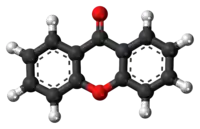 | |
9H-xanthen-9-one | |
別称 9-oxo-xanthene diphenyline ketone oxide | |
| 識別情報 | |
| CAS登録番号 | 90-47-1  |
| PubChem | 7020 |
| ChemSpider | 6753 |
| ChEBI | |
| ChEMBL | CHEMBL186784 |
| |
| |
| 特性 | |
| 化学式 | C13H8O2 |
| モル質量 | 196.19 g/mol |
| 外観 | オフホワイト色の固体 |
| 融点 |
174 °C, 447 K, 345 °F |
| 沸点 |
351 °C, 624 K, 664 °F |
| 水への溶解度 | 水に若干溶ける |
| 危険性 | |
| Rフレーズ | R36/37/38 |
| Sフレーズ | S26 S37[1] |
| 関連する物質 | |
| 関連物質 | キサンテン |
| 特記なき場合、データは常温 (25 °C)・常圧 (100 kPa) におけるものである。 | |
キサントン誘導体
キサントンの構造は、マンゴスチン等の様々な天然有機化合物の中心の核を形成しており、これらは総称して、キサントノイド等と呼ばれる[4]。200種類以上のキサントノイドが同定されている。ヤチモクコク科やフクギ科の植物に含まれ、またカワゴケソウ科のいくつかの種でも見られる[5]。これらのキサントン類の多くは、マンゴスチンの果実の果皮に含まれる。
出典
- MSDS from AlphaAesar
- Organic Syntheses, Coll. Vol. 1, p.552 (1941) - preparation of xanthone
- Steiner, L. F. and S. A. Summerland. 1943. Xanthone as an ovicide and larvicide for the codling moth. Journal of economic entomology 36, 435-439.
- PubMed.gov - journal articles on xanthones
-
- Angiosperm Phylogeny Group (2003). An update of the Angiosperm Phylogeny Group classification for the orders and families of flowering plants: APG II. Botanical Journal of the Linnean Society 141: 399-436 (Available online: Abstract | Full text (HTML) | Full text (PDF))
This article is issued from Wikipedia. The text is licensed under Creative Commons - Attribution - Sharealike. Additional terms may apply for the media files.