シンシチン-2
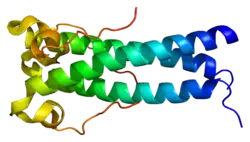
シンシチン-2(英: Syncytin-2)は、胚が子宮へと着床する際に重要な役割を果たすタンパク質である。 [5]ヒトではERVFRD-1遺伝子(endogenous retrovirus group FRD member 1, envelope)によってコードされる[6]。
| ERVFRD-1 | |||||||||||||||||||||||||
|---|---|---|---|---|---|---|---|---|---|---|---|---|---|---|---|---|---|---|---|---|---|---|---|---|---|
 | |||||||||||||||||||||||||
| 識別子 | |||||||||||||||||||||||||
| 記号 | ERVFRD-1, ERVFRDE1, GLLL6191, HERV-FRD, HERV-W/FRD, UNQ6191, envFRD, endogenous retrovirus group FRD member 1, endogenous retrovirus group FRD member 1, envelope | ||||||||||||||||||||||||
| 外部ID | OMIM: 610524 MGI: 3045308 HomoloGene: 86779 GeneCards: ERVFRD-1 | ||||||||||||||||||||||||
| |||||||||||||||||||||||||
| |||||||||||||||||||||||||
| オルソログ | |||||||||||||||||||||||||
| 種 | ヒト | マウス | |||||||||||||||||||||||
| Entrez | |||||||||||||||||||||||||
| Ensembl | |||||||||||||||||||||||||
| UniProt | |||||||||||||||||||||||||
| RefSeq (mRNA) | |||||||||||||||||||||||||
| RefSeq (タンパク質) | |||||||||||||||||||||||||
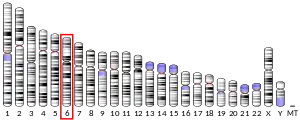
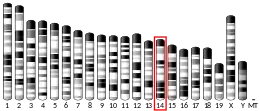
| 場所 (UCSC) | Chr 6: 11.1 – 11.11 Mb | Chr 6: 69.53 – 69.53 Mb | |||||||||||||||||||||||
| PubMed検索 | [3] | [4] | |||||||||||||||||||||||
| ウィキデータ | |||||||||||||||||||||||||
| |||||||||||||||||||||||||




この遺伝子はすべての霊長類で保存されており、4,500万年前から存在することが推定されている。このタンパク質に対応する受容体はMFSD2である。マウスのシンシチンは真のオーソログではない[7]。
ERVFRD-1遺伝子は、ガンマレトロウイルス様I型内在性レトロウイルス(ERV)のエンベロープに由来する。このプロウイルスには、gap(構造タンパク質)とpol(逆転写酵素)もコードされているが、何れも不活性化変異によりもはや機能していない。偶蹄目にも同様のERVがみられるが、霊長類とは独立してウイルス組み込みが起こった結果と推測されている[8]。「I型」ERVをガンマレトロウイルスとは別の属に分類することも提案されている[9]。
脚注
- GRCh38: Ensembl release 89: ENSG00000244476 - Ensembl, May 2017
- GRCm38: Ensembl release 89: ENSMUSG00000047977 - Ensembl, May 2017
- Human PubMed Reference:
- Mouse PubMed Reference:
- “Syncytin-2 plays an important role in the fusion of human trophoblast cells”. Journal of Molecular Biology 392 (2): 301–18. (2009). doi:10.1016/j.jmb.2009.07.025. PMID 19616006.
- “Entrez Gene: HERV-FRD HERV-FRD provirus ancestral Env polyprotein”. 2017年10月27日閲覧。
- “Paleovirology of 'syncytins', retroviral env genes exapted for a role in placentation”. Philosophical Transactions of the Royal Society of London. Series B, Biological Sciences 368 (1626): 20120507. (September 2013). doi:10.1098/rstb.2012.0507. PMC 3758191. PMID 23938756.
- Vargiu, L; Rodriguez-Tomé, P; Sperber, GO; Cadeddu, M; Grandi, N; Blikstad, V; Tramontano, E; Blomberg, J (22 January 2016). “Classification and characterization of human endogenous retroviruses; mosaic forms are common.”. Retrovirology 13: 7. doi:10.1186/s12977-015-0232-y. PMC 4724089. PMID 26800882.
- Gifford, RJ; Blomberg, J; Coffin, JM; Fan, H; Heidmann, T; Mayer, J; Stoye, J; Tristem, M et al. (28 August 2018). “Nomenclature for endogenous retrovirus (ERV) loci.”. Retrovirology 15 (1): 59. doi:10.1186/s12977-018-0442-1. PMC 6114882. PMID 30153831.
出典
- “Survey of human genes of retroviral origin: identification and transcriptome of the genes with coding capacity for complete envelope proteins”. Journal of Virology 77 (19): 10414–22. (October 2003). doi:10.1128/JVI.77.19.10414-10422.2003. PMC 228468. PMID 12970426.
- “Genomewide screening for fusogenic human endogenous retrovirus envelopes identifies syncytin 2, a gene conserved on primate evolution”. Proceedings of the National Academy of Sciences of the United States of America 100 (22): 13013–8. (October 2003). Bibcode: 2003PNAS..10013013B. doi:10.1073/pnas.2132646100. PMC 240736. PMID 14557543.
- “Identification of an envelope protein from the FRD family of human endogenous retroviruses (HERV-FRD) conferring infectivity and functional conservation among simians”. Journal of Virology 78 (2): 1050–4. (January 2004). doi:10.1128/JVI.78.2.1050-1054.2004. PMC 368808. PMID 14694139.
- “Crystal structure of a pivotal domain of human syncytin-2, a 40 million years old endogenous retrovirus fusogenic envelope gene captured by primates”. Journal of Molecular Biology 352 (5): 1029–34. (October 2005). doi:10.1016/j.jmb.2005.07.058. PMID 16140326.
- “Expression of the fusogenic HERV-FRD Env glycoprotein (syncytin 2) in human placenta is restricted to villous cytotrophoblastic cells”. Placenta 28 (2–3): 185–91. (2007). doi:10.1016/j.placenta.2006.03.001. PMID 16714059.
関連文献
This article is issued from Wikipedia. The text is licensed under Creative Commons - Attribution - Sharealike. Additional terms may apply for the media files.