ジュディスリバー累層
ジュディスリバー累層(ジュディスリバー層とも)はモンタナ州の地層の一つで、ジュディスリバー層群の一部を成す。地質年代は白亜紀後期カンパニアン(約8000万~7500万年前)。同じくモンタナ州にあるツーメディスン累層[1] およびアルバータ州のオールドマン累層と同じ年代である。[2] モノクロニウスを記載したエドワード・ドリンカー・コープのようなアメリカの古生物学者の黎明期における探検を語る上で重要な地層である。近年では極めて完全に近いブラキロフォサウルスの骨格が発見されている。
他の地層との関係
ジュディスリバー累層はクラゲット累層とパコウキ累層の上に重なっている。その上にはベアパウ累層が重なる[3] 。層序的にはカナディアンロッキーの南側、ベリーリバー累層、アルバータ州中部のリーピーク累層および北西平野のワピチ累層と同一である。
細別
ブリックレーク部層とリブストーンクリーク部層はジュディスリバー累層内の砂岩ユニットに区分される。非公式に知られるブロッシュー部層とビクトリア部層は矛盾した横方向の分布であるため、現在用いられることはまずない。
動物相
| ジュディスリバー累層から報告されている鳥盤類 | |||||||
|---|---|---|---|---|---|---|---|
| 属 | 種 | 産地 | 部位 | 標本 | メモ | 画像 | |
|
A. nesmoi[4] |
メデューサケラトプスとして再分類 |
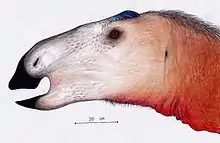 プロブラキロフォサウルス | |||||
|
A. lammersi[4] |
ケラトプス類 | ||||||
|
B. canadensis |
ハドロサウルス類 | ||||||
|
C. montanus |
ケラトプス類、疑問名 | ||||||
|
ディクロニウス |
D. calamarius |
"歯"[7] |
疑問名 | ||||
|
D. pentagonius |
ハドロサウルス類、疑問名 | ||||||
|
D. perengulatus |
"歯"[7] |
疑問名 | |||||
|
ディスガヌス |
D. bicarinatus |
"分離した歯"[6] |
疑問名 | ||||
|
D. encaustus |
疑問名 | ||||||
|
D. haydenianus |
"分離した歯"[6] |
疑問名 | |||||
|
D. peiganus |
"歯"[6] |
疑問名 | |||||
|
H. paucidens |
ランベオサウルス属の新種として再記載された | ||||||
|
J. tigris[8] |
ケラトプス類 | ||||||
|
?"K." breviceps |
ハドロサウルス類 | ||||||
|
?L. paucidens |
"鱗状骨、上顎骨[7] |
ハドロサウルス類 | |||||
|
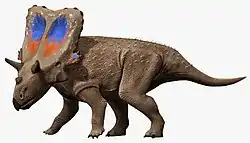
M. lokii[9] |
ケラトプス類 | ||||||
|
M. gemini[10] |
"鱗状骨"[10] |
ケラトプス類 | |||||
|
M. crassus[4] |
疑問名 | ||||||
|
パレオスキンクス |
P. costatus |
アンキロサウルス類、疑問名 | |||||
|
プロブラキロフォサウルス |
P. bergei |
ブラキロフォサウルス族のハドロサウルス類 | |||||
|
プテロペリクス |
P. grallipes |
"頭骨を欠く骨格"[12] |
ハドロサウルス類、疑問名 | ||||
|
T. mirabilis |
分離した歯、模式標本 |
ハドロサウルス類、疑問名 | |||||
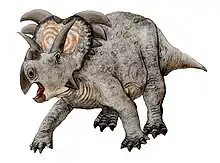
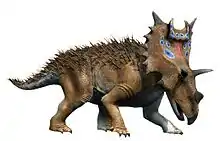
| スピクリペウス | S. shipporum | 断片的な頭骨、脊椎、肋骨、上腕骨、尺骨、大腿骨、脛骨、腓骨 | ケラトプス類 | ||||
| ズール | Z. crurivastator | 頭頂骨、軟組織を含む後頭骨 模式標本 | アンキロサウルス類 | ||||
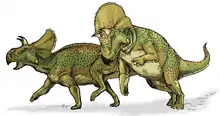
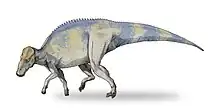
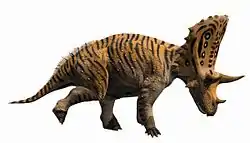
脚注
- Sullivan, R.M. and Lucas, S. G. (2006). "The Kirtlandian land-vertebrate “age”–faunal composition, temporal position and biostratigraphic correlation in the nonmarine Upper Cretaceous of western North America." Pp. 7-29 in Lucas, S. G. and Sullivan, R.M. (eds.), Late Cretaceous vertebrates from the Western Interior. New Mexico Museum of Natural History and Science Bulletin 35.
- Eberth, David A. (1997). “Judith River Wedge”. In Currie, Philip J.; Padian Kevin (eds.). Encyclopedia of Dinosaurs. San Diego: Academic Press. pp. 379-380. ISBN 0-12-226810-5
- Lexicon of Canadian Geological Units. "Judith River Formation". Retrieved 2009-02-06.
- Ryan and Evans, 2005
- "Table 23.1," in Weishampel, et al. (2004). Page 495.
- "Table 23.1," in Weishampel, et al. (2004). Page 496.
- "Table 20.1," in Weishampel, et al. (2004). Page 442.
- Nicholas R. Longrich (2013). “Judiceratops tigris, a New Horned Dinosaur from the Middle Campanian Judith River Formation of Montana”. Bulletin of the Peabody Museum of Natural History 54 (1): 51–65. doi:10.3374/014.054.0103.
- Ryan, Michael J.; Russell, Anthony P., and Hartman, Scott. (2010). "A New Chasmosaurine Ceratopsid from the Judith River Formation, Montana", In: Michael J. Ryan, Brenda J. Chinnery-Allgeier, and David A. Eberth (eds), New Perspectives on Horned Dinosaurs: The Royal Tyrrell Museum Ceratopsian Symposium, Indiana University Press, 656 pp. ISBN 0-253-35358-0.
- Ryan, Michael J.; Evans, David C.; Currie, Phillip J.; Loewen, Mark A. (2014). "A New chasmosaurine from northern Laramidia expands frill disparity in ceratopsid dinosaurs". Naturwissenschaften. doi:10.1007/s00114-014-1183-1
- "Table 17.1," in Weishampel, et al. (2004). Page 368.
- "Table 20.1," in Weishampel, et al. (2004). Page 443.