タウンゼンドジリス
タウンゼンドジリス (Urocitellus townsendii ) は、哺乳綱ネズミ目(齧歯目)リス科に分類されるジリスの1種。
| タウンゼンドジリス | ||||||||||||||||||||||||||||||||||||
|---|---|---|---|---|---|---|---|---|---|---|---|---|---|---|---|---|---|---|---|---|---|---|---|---|---|---|---|---|---|---|---|---|---|---|---|---|
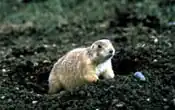 タウンゼンドジリス | ||||||||||||||||||||||||||||||||||||
| 保全状況評価[1] | ||||||||||||||||||||||||||||||||||||
| VULNERABLE (IUCN Red List Ver.3.1 (2001))  | ||||||||||||||||||||||||||||||||||||
| 分類 | ||||||||||||||||||||||||||||||||||||
| ||||||||||||||||||||||||||||||||||||
| 学名 | ||||||||||||||||||||||||||||||||||||
| Urocitellus townsendii Bachman, 1839 | ||||||||||||||||||||||||||||||||||||
| シノニム | ||||||||||||||||||||||||||||||||||||
| 和名 | ||||||||||||||||||||||||||||||||||||
| タウンゼンドジリス | ||||||||||||||||||||||||||||||||||||
| 英名 | ||||||||||||||||||||||||||||||||||||
| Townsend's ground squirrel | ||||||||||||||||||||||||||||||||||||
| 亜種 | ||||||||||||||||||||||||||||||||||||
|
形態
体長(頭胴長)200-232ミリメートル[2]、尾長32-54ミリメートル[2]、体重82-325グラム[3]、平均174グラム[2]。 被毛はピンクがかった黄褐色で、根元は淡い煙灰色[2]。斑点や縞などの模様がないことで他のジリスと判別できる[4]。
生態
オスは5月下旬から、メスと子どもは6月から冬眠に入り、1月下旬-2月に目覚める[2]。冬眠は、7.5-9か月の間も続く[5][6]。雨の多い年には食糧となる植物が夏の終わりにも手に入るため、乾燥した年よりも休眠が短くなる[7][5]。
繁殖は年1回、1月下旬または2月上旬頃、冬眠から目覚めてすぐに行われる[7]。妊娠期間は約24日間で[5]、巣穴の中で6-10頭の子どもを産む[8]。子どもは無毛、閉眼で生まれる。生後初期の発達は、他のジリスの発達と比べると比較的遅く、生後19-22日で目が開き、その後じきに離乳する[8]。生後4週になる3月下旬-4月頃に巣穴から現れる[2]。
主にアメリカアナグマに捕食され、他にもコヨーテ、アカケアシノスリ (Buteo regalis)[9]やソウゲンハヤブサ[10][11]などの猛禽類、ワタリガラスが捕食者として挙げられる[2]。
食性
主に草食性で、芽、葉、花、イネ科植物、広葉草本、灌木の種子、農作物を食べるが、昆虫を食べることもある[2][12][13]。種子は、冬眠前の重要なカロリー源となる[14]。
ワシントン州東部の保護区 (Arid Land Ecology Reserve) では、3月から5月にかけて、食物の49パーセントがイネ科のサンドバーグ・ブルーグラス (Sandberg bluegrass) 、11パーセントがウェスタン・ヤロウ(セイヨウノコギリソウの変種、Achillea millefolium var. occidentalis)、8パーセントがクジラグサ (Descurainia pinnata) の種子、31パーセントがその他の植物(大部分が広葉草本)、1パーセントが昆虫だった[13]。
分類
- タウンゼンドジリス Urocitellus townsendii
- U. t. nancyae – ワシントン州、ヤキマ川 (Yakima River) およびコロンビア川北部、染色体数は 2n=38[2]。
- U. t. townsendii – ワシントン州、ヤキマ川北部およびコロンビア川西部、染色体数は 2n=36[2]。
以下の2種およびその亜種は、かつてタウンゼンドジリスの亜種とされていた[2][15][16]。
- Merriam's ground squirrel Urocitellus canus – 染色体数は 2n=46[4]。
- U. c. canus - オレゴン州東部、カリフォルニア州北東端、ネバダ州北西端。頭蓋骨および体の大きさはU. c. vigilisよりもわずかに小さい。
- U. c. vigilis – オレゴン州中東部およびアイダホ州中西部のスネークリバーキャニオン (Snake River Canyon (Idaho)) の底地。被毛はU. c. canusよりも白っぽい。
- Piute ground squirrel Urocitellus mollis - 染色体数は 2n=38[4]。グレートベースンに生息する。
- U. m. artemesiae – アイダホ州中南部、スネークリバー平原 (Snake River Plain) 、スネーク川北部。小型の亜種。
- U. m. idahoensis – アイダホ州南西部、スネーク川北東部。大型の亜種。
- U. m. mollis – ネバダ州、カリフォルニア州東部、オレゴン州南東部、アイダホ州南部、ユタ州西部。中型の亜種。
保全状況評価
生息域の多くの地域で、農地を荒らす害獣とみなされ毒殺や狩猟が行われており、個体数は減少傾向にある[2]。IUCNレッドリストでは、Vulnerable (VU) 絶滅危惧II類に指定されている[1]。
脚注
- Yensen, E. & Hammerson, G. (2008). "Spermophilus townsendii". IUCN Red List of Threatened Species. Version 2008. International Union for Conservation of Nature. 2009年1月8日閲覧。
- Richard W. Thorington, Jr. (2012). Squirrels of the World. Johns Hopkins University Press. pp. 363-364
- Fifield, E (2013年). “"Spermophilus townsendii" (On-line), Animal Diversity Web.”. 2014年7月16日閲覧。
- Roland W. Kays and Don E. Wilson (2002). Mammals of North America. Princeton field guides. Princeton University Press. pp. 60-61
- Alcorn, J. R. (1940). “Life history notes on the Piute ground squirrel”. Journal of Mammalogy 21 (2): 160–170. doi:10.2307/1374972. JSTOR 1374972.
- Rickart, Eric A. (1982). “Annual cycles of activity and body composition in Spermophilus townsendii mollis”. Canadian Journal of Zoology 60 (12): 3298–3306. doi:10.1139/z82-418.
- Smith, Graham W.; Johnson, Donald R. (1985). “Demography of a Townsend ground squirrel population in southwestern Idaho”. Ecology 66 (1): 171–178. doi:10.2307/1941317. JSTOR 1941317.
- Rickart, Eric A. (1987). “Spermophilus townsendii”. Mammalian Species 268: 1–6.
- Kindschy, Robert R. (1986). “Rangeland vegetative succession – implications to wildlife”. Rangelands 8 (4): 157–159.
- Nydegger, Nicholas C.; Smith, Graham W. 1986. Prey populations in relation to Artemisia vegetation types in southwestern Idaho. In: McArthur, E. Durant; Welch, Bruce L., compilers. Proceedings – symposium on the biology of Artemisia and Chrysothamnus; 1984 July 9–13; Provo, UT. Gen. Tech. Rep. INT-200. Ogden, UT: U.S. Department of Agriculture, Forest Service, Intermountain Research Station: 152–156
- Ogden, Verland T.; Hornocker, Maurice G. (1977). “Nesting density and success of prairie falcons in southwestern Idaho”. Journal of Wildlife Management 41 (1): 1–11. doi:10.2307/3800084.
- Clary, Warren P.; Medin, Dean E. 1992. Vegetation, breeding bird, and small mammal biomass in two high-elevation sagebrush riparian habitats. In: Clary, Warren P.; McArthur, E. Durant; Bedunah, Don; Wambolt, Carl L., compilers. Proceedings – symposium on ecology and management of riparian shrub communities; 1991 May 29–31; Sun Valley, ID. Gen. Tech. Rep. INT-289. Ogden, UT: U.S. Department of Agriculture, Forest Service, Intermountain Research Station: 100–110
- Johnson, Mark K. (1977). “Food of Townsend ground squirrels on the Arid Land Ecology Reserve (Washington)”. The Great Basin Naturalist 37: 128.
- Rickart, Eric Allan. 1982. The ecology of Townsend's ground squirrel, Spermophilus townsendii mollis. Salt Lake City, UT: University of Utah. Dissertation
- "Urocitellus mollis" (英語). Integrated Taxonomic Information System. 2014年7月16日閲覧。
- "Urocitellus canus" (英語). Integrated Taxonomic Information System. 2014年7月16日閲覧。