テイオウムカシヤンマ
テイオウムカシヤンマ(帝王昔蜻蜓, Petalura ingentissima)は、ムカシヤンマ科のトンボの一種。原始的なトンボであり、「生きた化石」とも呼ばれる。トンボの中では最大である。
| テイオウムカシヤンマ | ||||||||||||||||||||||||
|---|---|---|---|---|---|---|---|---|---|---|---|---|---|---|---|---|---|---|---|---|---|---|---|---|
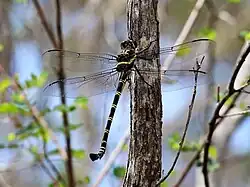 クイーンズランド州北部の雄 | ||||||||||||||||||||||||
| 保全状況評価[1] | ||||||||||||||||||||||||
| LEAST CONCERN (IUCN Red List Ver.3.1 (2001))  | ||||||||||||||||||||||||
| 分類 | ||||||||||||||||||||||||
| ||||||||||||||||||||||||
| 学名 | ||||||||||||||||||||||||
| Petalura ingentissima Tillyard, 1908 | ||||||||||||||||||||||||
| 英名 | ||||||||||||||||||||||||
| Giant Petaltail | ||||||||||||||||||||||||
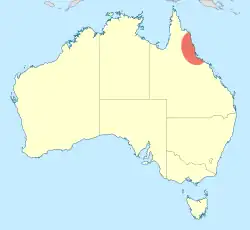 分布域 |
分類
1908年、昆虫学者のRobert John Tillyardによって記載された[2]。種小名はラテン語で「巨大な」を意味する形容詞に由来する。本種が分類されるPetalura 属は、オーストラリア固有の5種が含まれる。
形態
体は黒く、黄色い模様があり、尾は花びらのような形をしている[4]。オニヤンマよりも遥かに大きく、体長125 mm、翼開長は158 - 162 mmに達する。全体的には最大のトンボだが、翼開長はトゲオヤンマ属やハビロイトトンボの方が長く、翅面積はアゲハヤンマの方が大きい[5]。幼虫は6 cm程度[4]。
ギャラリー
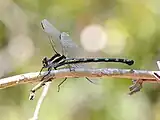 雌
雌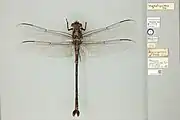 ロンドン自然史博物館にある雄の標本
.jpg.webp) 雌の翅
雌の翅.jpg.webp) 雄の翅
雄の翅
脚注
- Dow, R.A. (2017). “Petalura ingentissima”. IUCN Red List of Threatened Species 2017: e.T87536260A87540079. doi:10.2305/IUCN.UK.2017-1.RLTS.T87536260A87540079.en 2024年3月17日閲覧。.
- Tillyard, R. (1908). “On the genus Petalura, with description of a new species”. Proceedings of the Linnean Society of New South Wales 32: 708–718. doi:10.5962/bhl.part.19584.
- “Species Petalura ingentissima Tillyard, 1908”. Australian Faunal Directory. Australian Biological Resources Study (2012年). 2017年4月23日閲覧。
- Günther Theischinger, John Henry Hawking (2006). The complete field guide to dragonflies of Australia. CSIRO Publishing. pp. 110. ISBN 0643090738
- Silsby, Jill (2001). Dragonflies of the World. CSIRO Publishing. pp. 37. ISBN 0643065121
This article is issued from Wikipedia. The text is licensed under Creative Commons - Attribution - Sharealike. Additional terms may apply for the media files.