ディーダルガンシ・ヤクシー
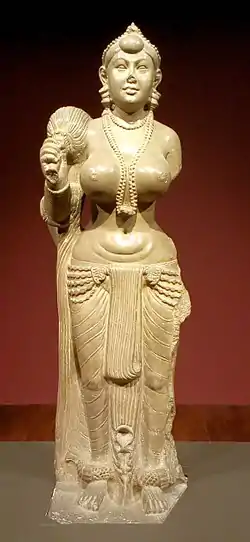
ディーダルガンシ・ヤクシー(Didarganj Yakshi、ヒンディー語: दीदारगंज यक्षी)は、非常に初期のインドの石像の最高の例の一つ。マウリヤ芸術に関連する、優れたマウリヤ式研磨が施されているため、かつては紀元前3世紀のものと考えられていた。しかし、これは後の時代の彫刻にも見られ、現在では、形や装飾の分析に基づいて、紀元2世紀頃[1][2]、または紀元1世紀のものと考えられている[3]。特に前髪の扱いはクシャーナ朝の特徴とされている[4]。
| ディーダルガンシ・ヤクシー | |
|---|---|
 | |
| 材質 | 研磨された砂岩 |
| 寸法 | Height: Width: |
| 時代/文化 | 紀元前3世紀または紀元1世紀 - 2世紀 |
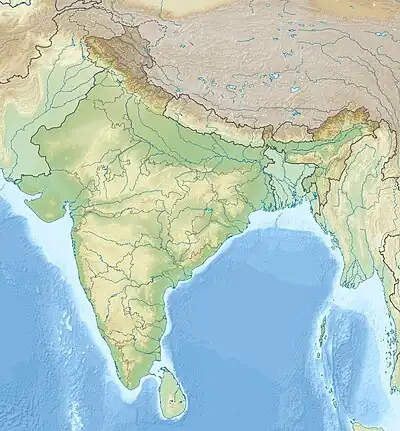
| 発見 | 25°34'18"N 85°15'45"E |
| 場所 | インド、ビハール州、パトナ、ディーダルガンシ |
| 所蔵 | ビハール博物館、インド |
  発見地 | |
インドの芸術における初期の彫刻の多くのように、それは主要な神ではなく、マイナーな霊的存在またはヤクシニーを表している[5]。
ギャラリー
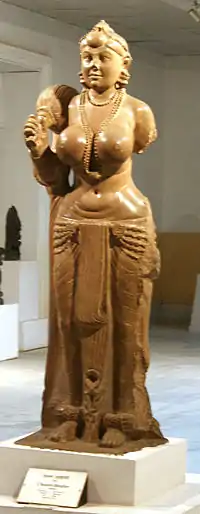 別の角度、ビハール博物館
 別の角度、ビハール博物館
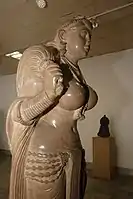 側面
側面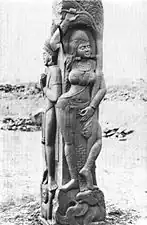 おそらく紀元前100年のヤクシー
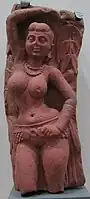 ウッタル・プラデーシュの起源2世紀のヤクシー
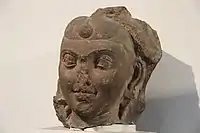 クシャーナ朝特有の、正面にシニヨンのある髪型の例
脚注
- "A History of Ancient and Early Medieval India: From the Stone Age to the 12th Century" by Upinder Singh, Pearson Education India, 2008
- ""Ayodhya, Archaeology After Demolition: A Critique of the "new" and "fresh" Discoveries", by Dhaneshwar Mandal, Orient Blackswan, 2003, p.46
- Harle, 31, "almost certainly a work of the first century AD"; Rowland, 100.
- Pereira, Jose (2001) (英語). Monolithic Jinas. Motilal Banarsidass. p. 11. ISBN 9788120823976
- Michell, 33
参考文献
- Harle, J.C., The Art and Architecture of the Indian Subcontinent, 2nd edn. 1994, Yale University Press Pelican History of Art, ISBN 0300062176
- Michell, George (1977), The Hindu Temple: An Introduction to its Meaning and Forms, 1977, University of Chicago Press, ISBN 978-0-226-53230-1
- Rowland, Benjamin, The Art and Architecture of India: Buddhist, Hindu, Jain, 1967 (3rd edn.), Pelican History of Art, Penguin, ISBN 0140561021
関連項目
This article is issued from Wikipedia. The text is licensed under Creative Commons - Attribution - Sharealike. Additional terms may apply for the media files.