ニッポンサイ
ニッポンサイ(日本犀、Stephanorhinus kirchbergensis[2]、旧学名Dicerorhinus nipponicus)は、チバニアン(中期更新世、数十万年前)に生息していた小型のサイである。
| ニッポンサイ | |||||||||||||||||||||||||||
|---|---|---|---|---|---|---|---|---|---|---|---|---|---|---|---|---|---|---|---|---|---|---|---|---|---|---|---|
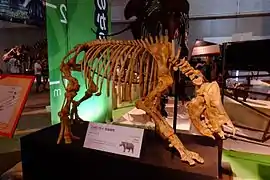 全身骨格 | |||||||||||||||||||||||||||
| 地質時代 | |||||||||||||||||||||||||||
| 更新世 | |||||||||||||||||||||||||||
| 分類 | |||||||||||||||||||||||||||
| |||||||||||||||||||||||||||
| 学名 | |||||||||||||||||||||||||||
| Stephanorhinus kirchbergensis Jäger, 1839 | |||||||||||||||||||||||||||
| シノニム | |||||||||||||||||||||||||||
| 和名 | |||||||||||||||||||||||||||
| ニッポンサイ | |||||||||||||||||||||||||||
| 英名 | |||||||||||||||||||||||||||
| Merck's rhinoceros forest rhinoceros |
概説
1966年に日本の山口県で化石が見つかり、鹿間時夫らによってサイの新種とされた[1][3]。体長3mくらい、角は1本、現生種スマトラサイに近縁と考えられている[4]。
栃木県佐野市会沢町[5]の葛生石灰岩地帯、千葉県市原市万田野の万田野層(約60万年前)[4]、山口県美祢市伊佐[3]の秋吉台、福岡県北九州市門司区恒見[6]で、化石が発見されている。
以前は日本固有種とされていたが、研究によりヨーロッパから東アジアまで広く分布していた種のシノニムとされるようになった[2]。
脚注
- 記載論文
- Handa, Naoto; Pandolfi, Luca (2016-07). “Reassessment of the Middle Pleistocene Japanese Rhinoceroses (Mammalia, Rhinocerotidae) and Paleobiogeographic Implications”. Paleontological Research 20 (3): 247–260. doi:10.2517/2015PR034. ISSN 1342-8144.
- 鳥取県立博物館 資料データベース ニッポンサイ
- 千葉県立博物館 資料データベース ニッポンサイの詳細情報
- 葛生化石館 展示室案内 サイの仲間たち
- 展示解説システム ニッポンサイ(全身骨格)レプリカ
This article is issued from Wikipedia. The text is licensed under Creative Commons - Attribution - Sharealike. Additional terms may apply for the media files.