ヴェクシロイド
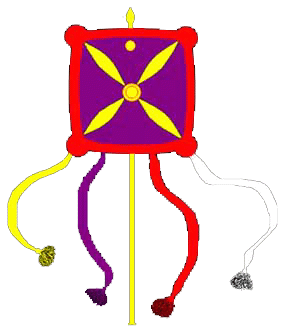
ヴェクシロイド (英語: vexilloid)は、国家や団体、個人のシンボルとして掲げられる標識。現代の一般的な旗とは区別されるもので、1958年にこの言葉を提起したアメリカの旗章学者ホイットニー・スミスは、ヴェクシロイドを次のように定義している。
'旗のような働きをするが、見た目などが旗と異なるもの。古い伝統的な社会で用いられたもので、旗のような布と、動物などを象って頂点に置いたエンブレムなどで構成されることが多い。—ホイットニー・スミス
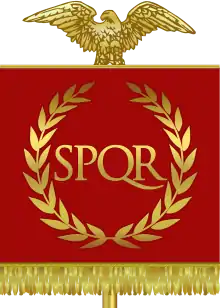
例えば、ローマ帝国のウェクシルム、船で用いたバンデロールやペノン、紋章旗、ゴンファロンなどが挙げられる。先史時代に敵の血を布に垂らして掲げたものが原初の形とされ、ここからヴェクシロイドへ、そして現在の旗へと変化していった[1]。
ヴェクシロイドは、中世の12世紀ごろから15世紀ごろにかけて、現代のような旗に取って代わられていった。しかしその後も、ヴェクシロイドは軍の部隊や様々な団体のシンボルとして一部で使われた[2]。
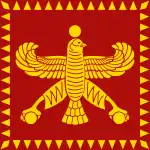
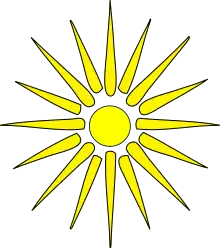


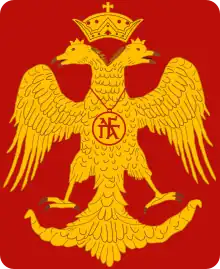
近代
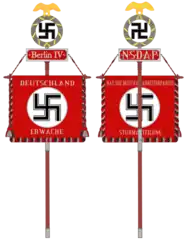
ナチ党のベルリン旗。"Deutschland Erwache"(ドイツよ目覚めよ)という標語があしらわれている。
脚注
- Vexilloids, Flags of the World.
- Smith, Whitney (1975). Flags through the ages and across the world. New York: McGraw-Hill. ISBN 9780070590939. OCLC 1324552
- Vexilloid of the Carthaginian Empire:
- Website honoring Dr. Kourosh Aryamanesh—Depicts images of the Derafsh Kaviani:
- Image of the Derafsh Kaviani:
- Hitler and the Rise of Nazism (Museum of World War II--Navick, Massachusetts, USA): Archived May 29, 2010, at the Wayback Machine.
- Image of an SS vexilloid: Archived December 18, 2010, at the Wayback Machine.


参考文献
- Smith, Whitney (1975). Flags Through the Ages and Across the World. New York: McGraw-Hill. ISBN 0-07-059093-1
This article is issued from Wikipedia. The text is licensed under Creative Commons - Attribution - Sharealike. Additional terms may apply for the media files.