式典
式典(しきてん、英: ceremony)は、特別な機会に行われ、大抵は多数の芸術的な要素から成る趣意を持った、一連の儀式的な催しである。
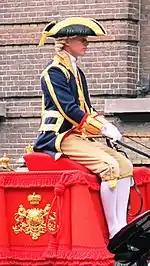
王子の日になされるオランダ王室の式典
ceremony の語はエトルリア語に起源があるとされ、ラテン語の「caerimonia 」を経由している。[1]
教会と市民(世俗)の式典
ダリー・メッセンジャーとアラン・ド・ボトンによると、大半の西洋諸国における教会と市民の双方の式典で言明されるその価値と理想は、一般に類似している。その違いは、メッセンジャーが呼ぶところの「超自然的な基盤」、ド・ボトンでは「信じ難き超自然的な要素」にある。[2][3]
大半の教会と宗教は、例えば神々により授けられたその付加的な利点を主張している。ローマ・カトリックでは、ミサ式での聖別の言葉を通じて神自らが祭壇に現れると信じられている。
教会と市民の双方の式典は、全ての式典が得ようとする強力な心理的・社会的・文化的影響力を分け合っている。演奏される音楽の様式、用いられる言葉や、その他の要素や構造は、当然異なる。
脚注
- Grimes, Ronald L. (2000). “Ritual”. In Willi Braun, Russell T. McCutcheon. Guide to the study of religion. Continuum International Publishing Group. p. 260. ISBN 0304701769
- Messenger, Dally, Murphy's Law and the Pursuit of Happiness: a History of the Civil Celebrant Movement, Spectrum Publications, Melbourne (Australia), 2012 ISBN 978-0-86786-169-3
- Kelly, Fran; Radio Interview with Alain de Botton, RN Breakfast, Australian Broadcasting Commission, Podcast 2012.
- Schillebeeckx, Edward; translated by N.D. Smith:; Secular Reality and Saving Mystery. Volumes 1 & 2, Sheed and Ward, London, 1963. Note: later versions have these ISBN 978-0722076644, 0722076649
This article is issued from Wikipedia. The text is licensed under Creative Commons - Attribution - Sharealike. Additional terms may apply for the media files.