成長ホルモン受容体
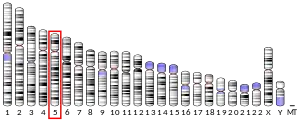
成長ホルモン受容体(せいちょうホルモンじゅようたい、英: growth hormone receptor、略称: GHR)は、ヒトではGHR遺伝子によってコードされるタンパク質である[5]。GHRのオルソログはほとんどの哺乳類で同定されている[6]。




構造
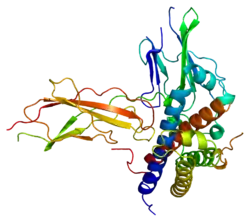
成長ホルモン受容体(GHR)は、620アミノ酸からなる膜貫通タンパク質である。GHRは全長の膜結合型受容体、そして可溶性の成長ホルモン結合タンパク質(GHBP)という2つの形態で存在する[7]。GHRの細胞外領域には2つのフィブロネクチンIII型ドメインが存在し、細胞内領域にはSH2タンパク質のためのチロシンキナーゼJAK2結合部位が存在する。JAK2は成長ホルモンシグナルの主要な伝達因子である[8]。
機能
GHR遺伝子は成長ホルモンに対する膜貫通受容体タンパク質をコードする[9][10]。受容体への成長ホルモンの結合は既に組み立てられた受容体二量体の再配置を引き起こし(受容体は細胞表面で単量体として存在する可能性もある[11])、細胞内・細胞間のシグナル伝達経路を活性化して成長をもたらす[12]。エクソン3を欠く、GHRd3と呼ばれる一般的な変異アレルもよく特徴づけられている。GHR遺伝子の変異はラロン症候群と関係している。この疾患はgrowth hormone insensitivity syndrome(GHIS)としても知られ、低身長(均衡型小人症)によって特徴づけられる。可溶型タンパク質GHRtrなど、他のスプライスバリアントも記載されているが、完全に特徴づけられているわけではない[5]。ラロンマウス(Ghrに欠陥を有する遺伝子改変マウス)は体重が劇的に低下するとともに、寿命は伸びる[13]。
進化
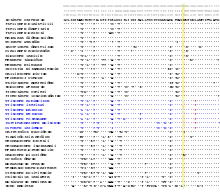
GHR遺伝子は動物の核DNAの系統学的マーカーとして利用される[22]。エクソン10は齧歯目の主要なグループの系統解析に利用されている[23][24][25]。またGHRは、デグー科[14][26]、ハタネズミ亜科[27]、ネズミ上科[28][29]、ネズミ亜科[30]、シロアシネズミ属[31]など齧歯目のより低い分類レベルや、クマ下目[32]、ネコ科[33]、および皮翼目[34]の分類においても有用であることが示されている。また、GHRのイントロン9は、イタチ科[35]やハイエナ科[36]の系統解析にも利用されている。
アンタゴニスト
ペグビソマント(商標名: ソマバート)などの成長ホルモン受容体アンタゴニストは先端巨大症の治療に利用される[37]。これらは先端巨大症の原因となっている下垂体腫瘍を手術や放射線でコントロールできず、ソマトスタチンアナログ製剤を使用しても効果がない場合に使用される。ペグビソマントは粉末状で、水と混ぜて皮下注射される[38]。
出典
- GRCh38: Ensembl release 89: ENSG00000112964 - Ensembl, May 2017
- GRCm38: Ensembl release 89: ENSMUSG00000055737 - Ensembl, May 2017
- Human PubMed Reference:
- Mouse PubMed Reference:
- “Entrez Gene: GHR growth hormone receptor”. 2021年9月4日閲覧。
- “ENSG00000112964_GHR”. orthomam.mbb.cnrs.fr. 2021年9月4日閲覧。
- “Growth hormone receptor: structure and signal transduction” (英語). European Journal of Endocrinology 133 (6): 654–9. (December 1995). doi:10.1530/eje.0.1330654. PMID 8548048.
- “Growth hormone receptor; mechanism of action”. The International Journal of Biochemistry & Cell Biology 40 (10): 1984–9. (2008-01-01). doi:10.1016/j.biocel.2007.07.008. PMID 17888716.
- “The Growth Hormone Receptor: Mechanism of Receptor Activation, Cell Signaling, and Physiological Aspects”. Frontiers in Endocrinology 9: 35. (13 February 2018). doi:10.3389/fendo.2018.00035. PMC 5816795. PMID 29487568.
- “The growth hormone receptor: mechanism of activation and clinical implications”. Nature Reviews. Endocrinology 6 (9): 515–25. (September 2010). doi:10.1038/nrendo.2010.123. PMID 20664532.
- “Differential regulation of membrane associated-growth hormone binding protein (MA-GHBP) and growth hormone receptor (GHR) expression by growth hormone (GH) in mouse liver”. Growth Hormone & IGF Research 17 (2): 104–12. (April 2007). doi:10.1016/j.ghir.2006.12.002. PMID 17321774.
- “Mechanism of activation of protein kinase JAK2 by the growth hormone receptor”. Science 344 (6185): 1249783. (May 2014). doi:10.1126/science.1249783. PMID 24833397.
- List, Edward O.; Sackmann-Sala, Lucila; Berryman, Darlene E.; Funk, Kevin; Kelder, Bruce; Gosney, Elahu S.; Okada, Shigeru; Ding, Juan et al. (2011-06). “Endocrine parameters and phenotypes of the growth hormone receptor gene disrupted (GHR-/-) mouse”. Endocrine Reviews 32 (3): 356–386. doi:10.1210/er.2010-0009. ISSN 1945-7189. PMC 3365798. PMID 21123740.
- “Mitogenomic Phylogeny, Diversification, and Biogeography of South American Spiny Rats”. Molecular Biology and Evolution 34 (3): 613–633. (March 2017). doi:10.1093/molbev/msw261. PMID 28025278.
- “Small glutamine-rich tetratricopeptide repeat-containing protein (SGT) interacts with the ubiquitin-dependent endocytosis (UbE) motif of the growth hormone receptor”. The Biochemical Journal 373 (Pt 3): 855–63. (August 2003). doi:10.1042/BJ20021591. PMC 1223544. PMID 12735788.
- “Mutation of the SHP-2 binding site in growth hormone (GH) receptor prolongs GH-promoted tyrosyl phosphorylation of GH receptor, JAK2, and STAT5B”. Molecular Endocrinology 14 (9): 1338–50. (September 2000). doi:10.1210/me.14.9.1338. PMID 10976913.
- “Grb10 identified as a potential regulator of growth hormone (GH) signaling by cloning of GH receptor target proteins”. The Journal of Biological Chemistry 273 (26): 15906–12. (June 1998). doi:10.1074/jbc.273.26.15906. PMID 9632636.
- “Regions of the JAK2 tyrosine kinase required for coupling to the growth hormone receptor”. The Journal of Biological Chemistry 270 (24): 14776–85. (June 1995). doi:10.1074/jbc.270.24.14776. PMID 7540178.
- “Domains of the growth hormone receptor required for association and activation of JAK2 tyrosine kinase”. The Journal of Biological Chemistry 269 (34): 21709–17. (August 1994). doi:10.1016/S0021-9258(17)31863-X. PMID 8063815.
- “The growth hormone receptor associates with Jak1, Jak2 and Tyk2 in human liver”. Growth Hormone & IGF Research 9 (3): 212–8. (June 1999). doi:10.1054/ghir.1999.0111. PMID 10502458.
- “SOCS/CIS protein inhibition of growth hormone-stimulated STAT5 signaling by multiple mechanisms”. The Journal of Biological Chemistry 274 (50): 35553–61. (December 1999). doi:10.1074/jbc.274.50.35553. PMID 10585430.
- “OrthoMaM phylogenetic marker: GHR coding sequence”. 2015年9月24日時点のオリジナルよりアーカイブ。2009年11月18日閲覧。
- “Molecular phylogeny and divergence time estimates for major rodent groups: evidence from multiple genes”. Molecular Biology and Evolution 18 (5): 777–91. (May 2001). doi:10.1093/oxfordjournals.molbev.a003860. PMID 11319262.
- “Higher-level systematics of rodents and divergence time estimates based on two congruent nuclear genes”. Molecular Phylogenetics and Evolution 26 (3): 409–20. (March 2003). doi:10.1016/S1055-7903(02)00304-4. PMID 12644400.
- “Rodent phylogeny revised: analysis of six nuclear genes from all major rodent clades”. BMC Evolutionary Biology 9: 71. (April 2009). doi:10.1186/1471-2148-9-71. PMC 2674048. PMID 19341461.
- “Molecular systematics of the South American caviomorph rodents: relationships among species and genera in the family Octodontidae”. Molecular Phylogenetics and Evolution 26 (3): 476–89. (March 2003). doi:10.1016/S1055-7903(02)00368-8. hdl:10533/174195. PMID 12644405.
- “The evolutionary radiation of Arvicolinae rodents (voles and lemmings): relative contribution of nuclear and mitochondrial DNA phylogenies”. BMC Evolutionary Biology 6: 80. (October 2006). doi:10.1186/1471-2148-6-80. PMC 1618403. PMID 17029633.
- “Phylogeny and divergence-date estimates of rapid radiations in muroid rodents based on multiple nuclear genes”. Systematic Biology 53 (4): 533–53. (August 2004). doi:10.1080/10635150490468701. PMID 15371245.
- “Pliocene colonization and adaptive radiations in Australia and New Guinea (Sahul): multilocus systematics of the old endemic rodents (Muroidea: Murinae)”. Molecular Phylogenetics and Evolution 47 (1): 84–101. (April 2008). doi:10.1016/j.ympev.2008.01.001. PMID 18313945.
- “Phylogeny and biogeography of African Murinae based on mitochondrial and nuclear gene sequences, with a new tribal classification of the subfamily”. BMC Evolutionary Biology 8: 199. (July 2008). doi:10.1186/1471-2148-8-199. PMC 2490707. PMID 18616808.
- Miller J. R.; Engstrom M. D. (2008). “The relationships of major lineages within peromyscine rodents: a molecular phylogenetic hypothesis and systematic reappraisal”. J. Mammal. 89 (5): 1279–1295. doi:10.1644/07-MAMM-A-195.1.
- “Molecular phylogeny of the Arctoidea (Carnivora): effect of missing data on supertree and supermatrix analyses of multiple gene data sets”. Molecular Phylogenetics and Evolution 41 (1): 165–81. (October 2006). doi:10.1016/j.ympev.2006.05.025. PMID 16814570.
- “The late Miocene radiation of modern Felidae: a genetic assessment”. Science 311 (5757): 73–7. (January 2006). Bibcode: 2006Sci...311...73J. doi:10.1126/science.1122277. PMID 16400146.
- “Evidence for multiple species of Sunda colugo”. Current Biology 18 (21): R1001-2. (November 2008). doi:10.1016/j.cub.2008.09.005. PMID 19000793.
- “Type I STS markers are more informative than cytochrome B in phylogenetic reconstruction of the Mustelidae (Mammalia: Carnivora)”. Systematic Biology 52 (5): 571–93. (October 2003). doi:10.1080/10635150390235368. PMID 14530127.
- “Molecular systematics of the Hyaenidae: relationships of a relictual lineage resolved by a molecular supermatrix”. Molecular Phylogenetics and Evolution 38 (3): 603–20. (March 2006). doi:10.1016/j.ympev.2005.10.017. PMID 16503281.
- “Treatment of acromegaly with the GH receptor antagonist pegvisomant in clinical practice: safety and efficacy evaluation from the German Pegvisomant Observational Study”. European Journal of Endocrinology 156 (1): 75–82. (January 2007). doi:10.1530/eje.1.02312. PMID 17218728.
- “Scientific Discussion of Somavert”. European Medicines Agency (2004年). 2021年9月4日閲覧。
外部リンク
- Somatotropin receptors - MeSH・アメリカ国立医学図書館・生命科学用語シソーラス(英語)
- Illustration at nih.gov
- Overview
- Growth Hormone Receptor: Molecule of the Month by Shuchismita Dutta and David Goodsell (April 2004)
- PDBe-KB provides an overview of all the structure information available in the PDB for Human Growth hormone receptor