防鎖
防鎖(ぼうさ、英語: boom, chain)は、港や河川を封鎖し船舶の通行を妨げるために用いられる太く頑丈な鎖[1]。一般に軍事目的で、敵の侵入を阻むために設置される。近現代においては潜水艦の侵入を阻止する防潜網が挙げられる。また河川に設置し、船舶から通行料をとる例も見られた[2]。
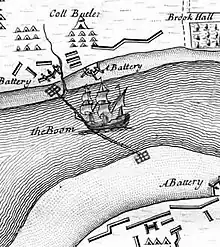
ロンドンデリー包囲戦でフォイル川を封鎖する防鎖
概要
英語ではブーム(boom)とチェーン(chain)という2通りの言葉があるが、ブームは水面に浮く防材のみを指すのに対し、チェーンは加えて水中に渡す防鎖も指す。
中世ヨーロッパの港では、湾口の両岸に鎖塔が建てられ、ここから常に鎖が渡されていた。平時は鎖を緩めて沈めているのだが、戦時には巻き上げて水面に引き上げ、湾口を封鎖するのである。 これにより味方を通行させ、敵を妨げるというような応変の制御が容易にできた。鎖の巻き上げ・巻き下げには、ウィンドラス(ハンドル式揚錨機)やキャプスタン(絞盤)が用いられることもあった[3]。
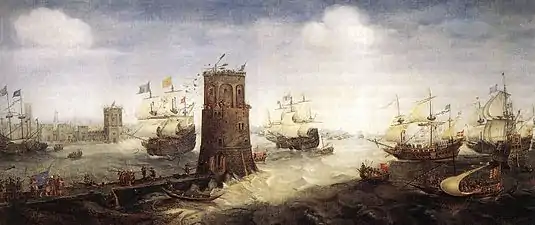

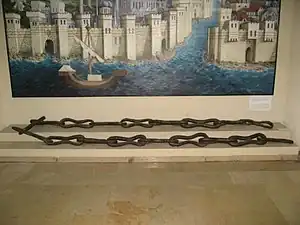
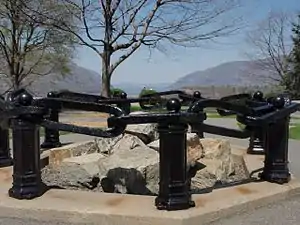
著名な防鎖
注釈
- A.^ ダミエッタ包囲戦とメドウェイ川襲撃については、敵船によって破壊されたのではなく事前に解体されていたという資料もある。
脚注
- Philip Davis (2012年5月7日). “Site types in the Gatehouse listings — Chain Tower”. Gatehouse. 2013年10月17日閲覧。
- Boom Towers, Norwich
- Bob Hind (2013年1月27日). “Filling in the missing links on history of harbour chain”. The News 2013年10月17日閲覧。
- Gibbon, Edward. The History of the Decline and Fall of the Roman Empire, Volume 6. p. 510
- “THE DUTCH IN THE MEDWAY - 1667”. M.A. de Ruyter Foundation. 2013年10月21日時点のオリジナルよりアーカイブ。2013年10月21日閲覧。
- Hervey, Frederic (1779). The Naval History of Great Britain: From the Earliest Times to the Rising of the Parliament in 1779. W Adlard. pp. 77
- Long, WH (2010). Medals of the British Navy and How They Were Won. Great Britain: Lancer Publishers. p. 24. ISBN 9781935501275
関連項目
- Baum (Sperranlage) - 関税を徴取し、夜間時などの侵入を塞ぐための浮く防材を含めた防御施設。
- 船番所 - 江戸時代の船の関税徴収所。
This article is issued from Wikipedia. The text is licensed under Creative Commons - Attribution - Sharealike. Additional terms may apply for the media files.