プラコグロビン
プラコグロビン(ジャンクションプラコグロビン、英: junction plakoglobin)またはγ-カテニン(英: gamma-catenin)は、ヒトではJUP遺伝子によってコードされるタンパク質である[5]。プラコグロビンはカテニンファミリーのメンバーであり、β-カテニンと相同である。プラコグロビンは、心筋の介在板内に位置するデスモソームとアドヘレンスジャンクションの細胞質側構成要素であり、サルコメアを固定し、隣接する心筋細胞を連結する機能を果たす。プラコグロビンの変異は不整脈原性右室心筋症と関係している。




構造
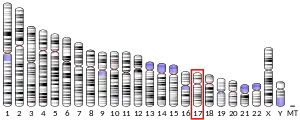
ヒトのプラコグロビンは745アミノ酸からなり、81.7 kDaである[6]。JUP遺伝子は13個のエクソンを持ち、17q21に位置する17kbの長さの遺伝子である[7]。プラコグロビンはカテニンファミリーのメンバーであり、アルマジロリピートと呼ばれる明確な反復配列モチーフを持つ[5]。プラコグロビンはβ-カテニンと高度に類似しており、どちらも12個のアルマジロリピートと構造未知のN末端、C末端の球状ドメインを持つ[8]。
機能
プラコグロビンは、デスモソームとアドヘレンスジャンクションの双方において主要な細胞質側の構成要素である。心筋細胞の介在板に位置するこれらの構造において、膜直下の斑構造に共通して存在する既知の唯一の構成要素である[9]。プラコグロビンはカドヘリンとアクチン骨格を連結する。プラコグロビンはデスモグレインとデスモコリンの細胞内カテニン結合部位の保存された領域に結合し、デスモソームを組み立てる[10][11]。
プラコグロビンは介在板の正常な発生と心筋の安定性に必要不可欠である。JUP遺伝子のヌル変異のホモ接合型トランスジェニックマウスは、心臓におけるアドヘレンスジャンクションの重大な欠陥と機能的デスモソームの欠落のため胎生12日前後で死亡する[12][13]。JUPヌル変異マウス胚から得られた心筋線維では、サルコメアのアドヘレンスジャンクションへの接着は正常であるが、受動的コンプライアンスが低下していることが示されている[14]。
また、プラコグロビンの心臓特異的コンディショナルノックアウトマウスも作製されている。このトランスジェニックマウスは、心筋細胞の喪失、線維症と心臓機能の異常といった不整脈原性右室心筋症の患者と同じ表現型を示し、さらにデスモソームタンパク質の組成の変化やギャップジャンクションのリモデリングがみられる。また、心臓ではβ-カテニンシグナルの増加がみられる[15][16]。心臓におけるβ-カテニンとプラコグロビンの役割の研究のため、これらのダブルノックアウトマウスも作製されている。このマウスでは心筋症、線維症、伝導異常、心臓突然死がみられ、おそらく致死的な特発性の心室性不整脈によるものである。また、マウスは介在板のギャップジャンクション構造の減少も示す[17]。
細胞内のプラコグロビンの発現は、Wntシグナルとユビキチン-プロテアソーム依存的な分解によって制御されている。GSK3βと足場タンパク質のAPC、Axinからなる分解複合体(destruction complex)によるN末端のセリンのリン酸化によって、プラコグロビンは分解標的となる[18][19][20]。リン酸化されたモチーフがユビキチンリガーゼであるβ-TrCPによって認識されることで、26Sプロテアソーム依存的な分解の標的となる[21]。
臨床的意義
プラコグロビンをコードするJUP遺伝子の変異は、不整脈原性右室心筋症(ARVC)と呼ばれる心筋症の原因の1つとして関与が示唆されている。JUPの変異は、具体的にはナクソス病と呼ばれる常染色体劣性型疾患を引き起こす[22][23][24]。この型は、ギリシャのナクソス島の家系で最初に同定された。ナクソス病型のARVCの表現型は、右心室とともに髪や皮膚が関係している点で独特である。患者は縮れたウール様の毛を持ち、また出生時に手掌と足底に紅斑があり、ハイハイや歩行で手掌や足底を使うようになるにつれて角化症へと進行する[25][26][27]。これらは思春期初期のARVCの発症と100%共分離する。分子遺伝学の進展によって、ARVCが心筋のデスモソームの疾患であることが明らとなっている[28][29][30][31][32][33][34][35][36]。
疾患の病理におけるプラコグロビンの役割に関する研究からは、siRNAによるデスモプラキンの発現抑制によってプラコグロビンは核に局在し、TCF/LEFを介したWntシグナルが減少することでARVCの発症に寄与することが示されている[37]。具体的には脂肪細胞化因子の発現が誘導され、心外膜の心筋前駆細胞は脂肪細胞へと分化する[38]。
非侵襲的な心臓スクリーニングでは、T波逆転、右室壁運動異常、頻発性の心室性期外収縮がJUP変異の高感度かつ特異的なマーカーとして特定されている[39]。さらに、心筋デスモソームタンパク質の免疫組織化学的解析もARVCの高感度かつ特異的な診断検査となることが示されている[40]。
デスモグレイン1やデスモグレイン3をコードする遺伝子の変異を原因とするプラコグロビン分布の異常は、尋常性天疱瘡への関与が示唆されている[41][42]。
相互作用
プラコグロビンは次に挙げる因子と相互作用することが示されている。
出典
- GRCh38: Ensembl release 89: ENSG00000173801 - Ensembl, May 2017
- GRCm38: Ensembl release 89: ENSMUSG00000001552 - Ensembl, May 2017
- Human PubMed Reference:
- Mouse PubMed Reference:
- “Entrez Gene: JUP junction plakoglobin”. 2022年4月20日閲覧。
- “Protein sequence of human JUP (Uniprot ID: P14923)”. Cardiac Organellar Protein Atlas Knowledgebase (COPaKB). 2015年9月24日時点のオリジナルよりアーカイブ。2015年7月3日閲覧。
- “Genomic organization and amplification of the human plakoglobin gene (JUP)”. Experimental Dermatology 9 (5): 323–6. (Oct 2000). doi:10.1034/j.1600-0625.2000.009005323.x. PMID 11016852.
- “Desmosomes from a structural perspective”. Current Opinion in Cell Biology 19 (5): 565–71. (Oct 2007). doi:10.1016/j.ceb.2007.09.003. PMC 2211412. PMID 17945476.
- “Plakoglobin: a protein common to different kinds of intercellular adhering junctions”. Cell 46 (7): 1063–73. (Sep 1986). doi:10.1016/0092-8674(86)90706-3. PMID 3530498.
- “Desmosomal cadherin binding domains of plakoglobin”. The Journal of Biological Chemistry 271 (18): 10904–9. (May 1996). doi:10.1074/jbc.271.18.10904. PMID 8631907.
- “Cadherin binding sites of plakoglobin: localization, specificity and role in targeting to adhering junctions”. Journal of Cell Science 109 (13): 3069–78. (Dec 1996). doi:10.1242/jcs.109.13.3069. PMID 9004041.
- “Targeted mutation of plakoglobin in mice reveals essential functions of desmosomes in the embryonic heart”. The Journal of Cell Biology 135 (1): 215–25. (Oct 1996). doi:10.1083/jcb.135.1.215. PMC 2121015. PMID 8858175.
- “Embryonic heart and skin defects in mice lacking plakoglobin”. Developmental Biology 180 (2): 780–5. (Dec 1996). doi:10.1006/dbio.1996.0346. PMID 8954745.
- “Plakoglobin is essential for myocardial compliance but dispensable for myofibril insertion into adherens junctions”. Journal of Cellular Biochemistry 72 (1): 8–15. (Jan 1999). doi:10.1002/(sici)1097-4644(19990101)72:1<8::aid-jcb2>3.0.co;2-a. PMID 10025662.
- “Cardiac tissue-restricted deletion of plakoglobin results in progressive cardiomyopathy and activation of {beta}-catenin signaling”. Molecular and Cellular Biology 31 (6): 1134–44. (Mar 2011). doi:10.1128/MCB.01025-10. PMC 3067899. PMID 21245375.
- “Restrictive loss of plakoglobin in cardiomyocytes leads to arrhythmogenic cardiomyopathy”. Human Molecular Genetics 20 (23): 4582–96. (Dec 2011). doi:10.1093/hmg/ddr392. PMC 3209829. PMID 21880664.
- “Loss of cadherin-binding proteins β-catenin and plakoglobin in the heart leads to gap junction remodeling and arrhythmogenesis”. Molecular and Cellular Biology 32 (6): 1056–67. (Mar 2012). doi:10.1128/MCB.06188-11. PMC 3295003. PMID 22252313.
- “Axin directly interacts with plakoglobin and regulates its stability”. The Journal of Biological Chemistry 274 (39): 27682–8. (Sep 1999). doi:10.1074/jbc.274.39.27682. PMID 10488109.
- “The APC protein and E-cadherin form similar but independent complexes with alpha-catenin, beta-catenin, and plakoglobin”. The Journal of Biological Chemistry 270 (10): 5549–55. (Mar 1995). doi:10.1074/jbc.270.10.5549. PMID 7890674.
- “Regulation of beta-catenin signaling in the Wnt pathway”. Biochemical and Biophysical Research Communications 268 (2): 243–8. (Feb 2000). doi:10.1006/bbrc.1999.1860. PMID 10679188.
- “Differential interaction of plakoglobin and beta-catenin with the ubiquitin-proteasome system”. Oncogene 19 (16): 1992–2001. (Apr 2000). doi:10.1038/sj.onc.1203519. PMID 10803460.
- “Normalization of Naxos plakoglobin levels restores cardiac function in mice”. The Journal of Clinical Investigation 125 (4): 1708–12. (Apr 2015). doi:10.1172/JCI80335. PMC 4396479. PMID 25705887.
- “Lack of plakoglobin in epidermis leads to keratoderma”. The Journal of Biological Chemistry 287 (13): 10435–43. (Mar 2012). doi:10.1074/jbc.M111.299669. PMC 3322998. PMID 22315228.
- “Genetic bases of arrhythmogenic right ventricular Cardiomyopathy”. Heart International 2 (1): 17. (2006). doi:10.4081/hi.2006.17. PMC 3184660. PMID 21977247.
- “Cardiomyopathy with alopecia and palmoplantar keratoderma (CAPK) is caused by a JUP mutation”. The British Journal of Dermatology 165 (4): 917–21. (Oct 2011). doi:10.1111/j.1365-2133.2011.10455.x. PMID 21668431.
- “Lack of plakoglobin leads to lethal congenital epidermolysis bullosa: a novel clinico-genetic entity”. Human Molecular Genetics 20 (9): 1811–9. (May 2011). doi:10.1093/hmg/ddr064. PMID 21320868.
- “Homozygous mutations in the 5' region of the JUP gene result in cutaneous disease but normal heart development in children”. The Journal of Investigative Dermatology 130 (6): 1543–50. (Jun 2010). doi:10.1038/jid.2010.7. PMID 20130592.
- “On the diagnostic utility of junction plakoglobin in arrhythmogenic right ventricular cardiomyopathy”. Cardiovascular Pathology 22 (5): 309–11. (2013). doi:10.1016/j.carpath.2013.05.002. PMID 23806441.
- “The ARVD/C genetic variants database: 2014 update”. Human Mutation 36 (4): 403–10. (Apr 2015). doi:10.1002/humu.22765. PMID 25676813.
- “Desmosomal gene analysis in arrhythmogenic right ventricular dysplasia/cardiomyopathy: spectrum of mutations and clinical impact in practice”. Europace 12 (6): 861–8. (Jun 2010). doi:10.1093/europace/euq104. PMID 20400443.
- McNally, E; MacLeod, H; Dellefave-Castillo, L; Pagon, R. A.; Adam, M. P.; Ardinger, H. H.; Wallace, S. E.; Amemiya, A et al. (1993). Arrhythmogenic Right Ventricular Dysplasia/Cardiomyopathy. PMID 20301310.
- “Multiple mutations in desmosomal proteins encoding genes in arrhythmogenic right ventricular cardiomyopathy/dysplasia”. Heart Rhythm 7 (1): 22–9. (Jan 2010). doi:10.1016/j.hrthm.2009.09.070. PMID 20129281.
- “Comprehensive desmosome mutation analysis in north americans with arrhythmogenic right ventricular dysplasia/cardiomyopathy”. Circulation: Cardiovascular Genetics 2 (5): 428–35. (Oct 2009). doi:10.1161/CIRCGENETICS.109.858217. PMC 2801867. PMID 20031617.
- “Mechanisms of disease: molecular genetics of arrhythmogenic right ventricular dysplasia/cardiomyopathy”. Nature Clinical Practice Cardiovascular Medicine 5 (5): 258–67. (May 2008). doi:10.1038/ncpcardio1182. PMC 2822988. PMID 18382419.
- “Molecular genetics of arrhythmogenic right ventricular cardiomyopathy: emerging horizon?”. Current Opinion in Cardiology 22 (3): 185–92. (May 2007). doi:10.1097/HCO.0b013e3280d942c4. PMID 17413274.
- “Role of genetic analysis in the management of patients with arrhythmogenic right ventricular dysplasia/cardiomyopathy”. Journal of the American College of Cardiology 50 (19): 1813–21. (Nov 2007). doi:10.1016/j.jacc.2007.08.008. PMID 17980246.
- “Suppression of canonical Wnt/beta-catenin signaling by nuclear plakoglobin recapitulates phenotype of arrhythmogenic right ventricular cardiomyopathy”. The Journal of Clinical Investigation 116 (7): 2012–21. (Jul 2006). doi:10.1172/JCI27751. PMC 1483165. PMID 16823493.
- “Arrhythmogenic right ventricular cardiomyopathy is a disease of cardiac stem cells”. Current Opinion in Cardiology 25 (3): 222–8. (May 2010). doi:10.1097/HCO.0b013e3283376daf. PMC 2980568. PMID 20124997.
- “Arrhythmogenic right ventricular cardiomyopathy caused by deletions in plakophilin-2 and plakoglobin (Naxos disease) in families from Greece and Cyprus: genotype-phenotype relations, diagnostic features and prognosis”. European Heart Journal 27 (18): 2208–16. (Sep 2006). doi:10.1093/eurheartj/ehl184. PMID 16893920.
- “Cardiomyopathies: New test for arrhythmogenic right ventricular cardiomyopathy”. Nature Reviews. Cardiology 6 (7): 450–1. (Jul 2009). doi:10.1038/nrcardio.2009.97. PMID 19554004.
- “A possible role of catenin dyslocalization in pemphigus vulgaris pathogenesis”. Journal of Cutaneous Pathology 28 (9): 460–9. (Oct 2001). doi:10.1034/j.1600-0560.2001.028009460.x. PMID 11553312.
- “Catenin dislocation in oral pemphigus vulgaris”. Journal of Oral Pathology & Medicine 30 (5): 268–74. (May 2001). doi:10.1034/j.1600-0714.2001.300503.x. PMID 11334462.
- “Association of plakoglobin with APC, a tumor suppressor gene product, and its regulation by tyrosine phosphorylation”. Biochemical and Biophysical Research Communications 203 (1): 519–22. (Aug 1994). doi:10.1006/bbrc.1994.2213. PMID 8074697.
- “The tyrosine kinase substrate p120cas binds directly to E-cadherin but not to the adenomatous polyposis coli protein or alpha-catenin”. Molecular and Cellular Biology 15 (9): 4819–24. (Sep 1995). doi:10.1128/mcb.15.9.4819. PMC 230726. PMID 7651399.
- “Identification of plakoglobin domains required for association with N-cadherin and alpha-catenin”. The Journal of Biological Chemistry 270 (34): 20201–6. (Aug 1995). doi:10.1074/jbc.270.34.20201. PMID 7650039.
- “A mutation in alpha-catenin disrupts adhesion in clone A cells without perturbing its actin and beta-catenin binding activity”. Cell Adhesion and Communication 5 (4): 283–96. (Jun 1998). doi:10.3109/15419069809040298. PMID 9762469.
- “Identification of the domain of alpha-catenin involved in its association with beta-catenin and plakoglobin (gamma-catenin)”. The Journal of Biological Chemistry 272 (17): 11017–20. (Apr 1997). doi:10.1074/jbc.272.17.11017. PMID 9110993.
- “The epidermal growth factor receptor modulates the interaction of E-cadherin with the actin cytoskeleton”. The Journal of Biological Chemistry 273 (15): 9078–84. (Apr 1998). doi:10.1074/jbc.273.15.9078. PMID 9535896.
- “Expression and interaction of different catenins in colorectal carcinoma cells”. International Journal of Molecular Medicine 8 (6): 695–8. (Dec 2001). doi:10.3892/ijmm.8.6.695. PMID 11712088.
- “Tyrosine phosphorylation regulates the adhesions of ras-transformed breast epithelia”. The Journal of Cell Biology 130 (2): 461–71. (Jul 1995). doi:10.1083/jcb.130.2.461. PMC 2199929. PMID 7542250.
- “Dynamics of cadherin/catenin complex formation: novel protein interactions and pathways of complex assembly”. The Journal of Cell Biology 125 (6): 1327–40. (Jun 1994). doi:10.1083/jcb.125.6.1327. PMC 2290923. PMID 8207061.
- “Plakoglobin, or an 83-kD homologue distinct from beta-catenin, interacts with E-cadherin and N-cadherin”. The Journal of Cell Biology 118 (3): 671–9. (Aug 1992). doi:10.1083/jcb.118.3.671. PMC 2289540. PMID 1639850.
- “A novel cell-cell junction system: the cortex adhaerens mosaic of lens fiber cells”. Journal of Cell Science 116 (Pt 24): 4985–95. (Dec 2003). doi:10.1242/jcs.00815. PMID 14625392.
- “Amino-terminal domain of classic cadherins determines the specificity of the adhesive interactions”. Journal of Cell Science 113 (16): 2829–36. (Aug 2000). doi:10.1242/jcs.113.16.2829. PMID 10910767.
- “Alteration of interendothelial adherens junctions following tumor cell-endothelial cell interaction in vitro”. Experimental Cell Research 237 (2): 347–56. (Dec 1997). doi:10.1006/excr.1997.3799. PMID 9434630.
- “Histamine stimulates phosphorylation of adherens junction proteins and alters their link to vimentin”. American Journal of Physiology. Lung Cellular and Molecular Physiology 282 (6): L1330–8. (Jun 2002). doi:10.1152/ajplung.00329.2001. PMID 12003790.
- “Isoform-specific differences in the size of desmosomal cadherin/catenin complexes”. The Journal of Investigative Dermatology 117 (5): 1302–6. (Nov 2001). doi:10.1046/j.1523-1747.2001.01512.x. PMID 11710948.
- “The amino- and carboxyl-terminal tails of (beta)-catenin reduce its affinity for desmoglein 2”. Journal of Cell Science 113 (10): 1737–45. (May 2000). doi:10.1242/jcs.113.10.1737. PMID 10769205.
- “The fourth armadillo repeat of plakoglobin (gamma-catenin) is required for its high affinity binding to the cytoplasmic domains of E-cadherin and desmosomal cadherin Dsg2, and the tumor suppressor APC protein”. Journal of Biochemistry 118 (5): 1077–82. (Nov 1995). doi:10.1093/jb/118.5.1077. PMID 8749329.
- “VE-cadherin and desmoplakin are assembled into dermal microvascular endothelial intercellular junctions: a pivotal role for plakoglobin in the recruitment of desmoplakin to intercellular junctions”. Journal of Cell Science 111 (20): 3045–57. (Oct 1998). doi:10.1242/jcs.111.20.3045. PMID 9739078.
- “The amino-terminal domain of desmoplakin binds to plakoglobin and clusters desmosomal cadherin-plakoglobin complexes”. The Journal of Cell Biology 139 (3): 773–84. (Nov 1997). doi:10.1083/jcb.139.3.773. PMC 2141713. PMID 9348293.
- “Heregulin targets gamma-catenin to the nucleolus by a mechanism dependent on the DF3/MUC1 oncoprotein”. Molecular Cancer Research 1 (10): 765–75. (Aug 2003). PMID 12939402.
- “Protein binding and functional characterization of plakophilin 2. Evidence for its diverse roles in desmosomes and beta -catenin signaling”. The Journal of Biological Chemistry 277 (12): 10512–22. (Mar 2002). doi:10.1074/jbc.M108765200. PMID 11790773.
- “Association of human protein-tyrosine phosphatase kappa with members of the armadillo family”. The Journal of Biological Chemistry 271 (28): 16712–9. (Jul 1996). doi:10.1074/jbc.271.28.16712. PMID 8663237.
- “Intracellular substrates of brain-enriched receptor protein tyrosine phosphatase rho (RPTPrho/PTPRT)”. Brain Research 1116 (1): 50–7. (Oct 2006). doi:10.1016/j.brainres.2006.07.122. PMID 16973135.
- “Adult mice deficient in actinin-associated LIM-domain protein reveal a developmental pathway for right ventricular cardiomyopathy”. Nature Medicine 7 (5): 591–7. (May 2001). doi:10.1038/87920. PMID 11329061.
関連文献
- “Plakoglobin: a protein common to different kinds of intercellular adhering junctions”. Cell 46 (7): 1063–73. (Sep 1986). doi:10.1016/0092-8674(86)90706-3. PMID 3530498.
- “Molecular cloning and amino acid sequence of human plakoglobin, the common junctional plaque protein”. Proceedings of the National Academy of Sciences of the United States of America 86 (11): 4027–31. (Jun 1989). Bibcode: 1989PNAS...86.4027F. doi:10.1073/pnas.86.11.4027. PMC 287381. PMID 2726765.
- “Interactions of the cytoplasmic domain of the desmosomal cadherin Dsg1 with plakoglobin”. The Journal of Biological Chemistry 269 (19): 14075–80. (May 1994). doi:10.1016/S0021-9258(17)36756-X. PMID 8188687.
- “The E-cadherin-catenin complex in tumour metastasis: structure, function and regulation”. European Journal of Cancer 36 (13 Spec No): 1607–20. (Aug 2000). doi:10.1016/S0959-8049(00)00158-1. PMID 10959047.
- “Polycystin: new aspects of structure, function, and regulation”. Journal of the American Society of Nephrology 12 (4): 834–45. (Apr 2001). doi:10.1681/ASN.V124834. PMID 11274246.
- “Arrhythmogenic right ventricular cardiomyopathy caused by a deletion in plakoglobin (Naxos disease)”. Cardiac Electrophysiology Review 6 (1–2): 72–80. (Feb 2002). doi:10.1023/A:1017943323473. PMID 11984022.
- “Plakoglobin, or an 83-kD homologue distinct from beta-catenin, interacts with E-cadherin and N-cadherin”. The Journal of Cell Biology 118 (3): 671–9. (Aug 1992). doi:10.1083/jcb.118.3.671. PMC 2289540. PMID 1639850.
- “Chromosomal assignment of the human genes coding for the major proteins of the desmosome junction, desmoglein DGI (DSG), desmocollins DGII/III (DSC), desmoplakins DPI/II (DSP), and plakoglobin DPIII (JUP)”. Genomics 10 (3): 640–5. (Jul 1991). doi:10.1016/0888-7543(91)90446-L. PMID 1889810.
- “Tyrosine phosphorylation regulates the adhesions of ras-transformed breast epithelia”. The Journal of Cell Biology 130 (2): 461–71. (Jul 1995). doi:10.1083/jcb.130.2.461. PMC 2199929. PMID 7542250.
- “The human plakoglobin gene localizes on chromosome 17q21 and is subjected to loss of heterozygosity in breast and ovarian cancers”. Proceedings of the National Academy of Sciences of the United States of America 92 (14): 6384–8. (Jul 1995). Bibcode: 1995PNAS...92.6384A. doi:10.1073/pnas.92.14.6384. PMC 41522. PMID 7604000.
- “Identification of plakoglobin domains required for association with N-cadherin and alpha-catenin”. The Journal of Biological Chemistry 270 (34): 20201–6. (Aug 1995). doi:10.1074/jbc.270.34.20201. PMID 7650039.
- “The tyrosine kinase substrate p120cas binds directly to E-cadherin but not to the adenomatous polyposis coli protein or alpha-catenin”. Molecular and Cellular Biology 15 (9): 4819–24. (Sep 1995). doi:10.1128/mcb.15.9.4819. PMC 230726. PMID 7651399.
- “c-erbB-2 gene product directly associates with beta-catenin and plakoglobin”. Biochemical and Biophysical Research Communications 208 (3): 1067–72. (Mar 1995). doi:10.1006/bbrc.1995.1443. PMID 7702605.
- “Plakoglobin binding by human Dsg3 (pemphigus vulgaris antigen) in keratinocytes requires the cadherin-like intracytoplasmic segment”. The Journal of Investigative Dermatology 104 (5): 720–4. (May 1995). doi:10.1111/1523-1747.ep12606963. PMID 7738346.
- “Association of p120, a tyrosine kinase substrate, with E-cadherin/catenin complexes”. The Journal of Cell Biology 128 (5): 949–57. (Mar 1995). doi:10.1083/jcb.128.5.949. PMC 2120395. PMID 7876318.
- “The APC protein and E-cadherin form similar but independent complexes with alpha-catenin, beta-catenin, and plakoglobin”. The Journal of Biological Chemistry 270 (10): 5549–55. (Mar 1995). doi:10.1074/jbc.270.10.5549. PMID 7890674.
- “Identification of amino acid sequence motifs in desmocollin, a desmosomal glycoprotein, that are required for plakoglobin binding and plaque formation”. Proceedings of the National Academy of Sciences of the United States of America 91 (23): 10790–4. (Nov 1994). Bibcode: 1994PNAS...9110790T. doi:10.1073/pnas.91.23.10790. PMC 45111. PMID 7971964.
- “Association of plakoglobin with APC, a tumor suppressor gene product, and its regulation by tyrosine phosphorylation”. Biochemical and Biophysical Research Communications 203 (1): 519–22. (Aug 1994). doi:10.1006/bbrc.1994.2213. PMID 8074697.
- “Dynamics of cadherin/catenin complex formation: novel protein interactions and pathways of complex assembly”. The Journal of Cell Biology 125 (6): 1327–40. (Jun 1994). doi:10.1083/jcb.125.6.1327. PMC 2290923. PMID 8207061.
- “Stratification-related expression of isoforms of the desmosomal cadherins in human epidermis”. Journal of Cell Science 104 (3): 741–50. (Mar 1993). doi:10.1242/jcs.104.3.741. PMID 8314871.
- “Cloning of an alternative form of plakoglobin (gamma-catenin) lacking the fourth armadillo repeat”. Journal of Biochemistry 118 (4): 836–40. (Oct 1995). doi:10.1093/oxfordjournals.jbchem.a124988. PMID 8576101.
- “Association of human protein-tyrosine phosphatase kappa with members of the armadillo family”. The Journal of Biological Chemistry 271 (28): 16712–9. (Jul 1996). doi:10.1074/jbc.271.28.16712. PMID 8663237.