NASA空気清浄研究
NASA空気清浄研究[1]は国立航空宇宙局(NASA)及び造園建設業協会(ALCA)主導のもと進められてきた。 その結果、屋内の観葉植物が空気中のベンゼン、ホルムアルデヒド、トリクロロエチレン、キシレン、トルエン、アンモニアなどの有害物質を自然に除去し、シックハウス症候群の抑制に一定の効果をもたらすことが判明した。
宇宙ステーション内の空気清浄法を研究するNASAの部署が、1989年[2][3][4]に最初の植物候補を発表した。植物が自然に行う二酸化炭素を吸収し酸素を放出する作用の他、これらの植物は上記有害物質の大量除去に役立つ。 第2第3の一覧は特定化学物質の除去に関するB.C.Wolvertonの文献[5]や論文[6]から得られた。
NASAの研究者が推奨する効率的な空気清浄法は、1つの植物あたり最低100平方フィートの屋内環境が改善される。 その他の研究では空気中のベンゼンの除去には、一部の植物種[7]や鉢植えの培養土内の微生物が担うと示されている。[8]
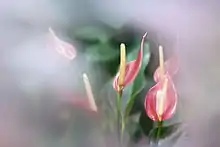
アンスリウム・アンドレアナム
植物の表
関連項目
脚注
- BC Wolverton; WL Douglas; K Bounds (July 1989). A study of interior landscape plants for indoor air pollution abatement (Report). NASA. NASA-TM-108061。
- Pottorff, L. Plants "Clean" Air Inside Our Homes. Colorado State University & Denver County Extension Master Gardener. 2010.
- Wolverton, B. C., et al. (1984). Foliage plants for removing indoor air pollutants from energy-efficient homes. Economic Botany 38(2), 224-28.
- Wolverton, B. C., et al. A study of interior landscape plants for indoor air pollution abatement: an interim report. NASA. September, 1989.
- Wolverton, B. C. (1996) How to Grow Fresh Air. New York: Penguin Books.
- Wolverton, B. C. and J. D. Wolverton. (1993). Plants and soil microorganisms: removal of formaldehyde, xylene, and ammonia from the indoor environment. Journal of the Mississippi Academy of Sciences 38(2), 11-15.
- Orwell, R.; Wood, R.; Tarran, J.; Torpy, F.; Burchett, M. (2004). “Removal of Benzene by the Indoor Plant/Substrate Microcosm and Implications for Air Quality”. Water, Air, & Soil Pollution 157 (1-4): 193–207. doi:10.1023/B:WATE.0000038896.55713.5b.
- “Removal of Benzene by the Indoor Plant/Substrate Microcosm and Implications for Air Quality”. Water, Air, & Soil Pollution 157 (1-4): 193–207. (2004). doi:10.1023/B:WATE.0000038896.55713.5b.
- ASPCA
- ASPCA
- ASPCA
- ASPCA
- ASPCA
- ASPCA
- ASPCA
- ASPCA
- ASPCA
- ASPCA
- Wolverton, B. C., et al. Interior landscape plants for indoor air pollution abatement: final report. NASA. September, 1989. pp 11-12.
- ASPCA
- ASPCA
- ASPCA
- ASPCA
- ASPCA
- American Society for Horticultural Science. Indoor plants can reduce formaldehyde levels. ScienceDaily. February 20, 2009. Quote: "...Complete plants removed approximately 80% of the formaldehyde within 4 hours. Control chambers pumped with the same amount of formaldehyde, but not containing any plant parts, decreased by 7.3% during the day and 6.9% overnight within 5 hours..." In reference to: Kim, J. K., et al. (2008). Efficiency of volatile formaldehyde removal by indoor plants: contribution of aerial plant parts versus the root zone. Horticultural Science 133: 479-627.
- ASPCA
- ASPCA
- ASPCA
- ASPCA
- ASPCA
- “15 houseplants for improving indoor air quality”. MNN - Mother Nature Network. 2016年1月4日閲覧。
- ASPCA
- ASPCA
This article is issued from Wikipedia. The text is licensed under Creative Commons - Attribution - Sharealike. Additional terms may apply for the media files.