ストレング石
ストレング石(ストレングいし、ストレンガイト、英: Strengite)は、 FePO4 · 2H2Oという組成式の、比較的稀少な鉄リン酸塩鉱物 [4] 。 別名をBarranditとも。「燐鉄鉱」とも呼ばれるが、同質異像のフォスフォシデライトと意味が被ることもあり、上記の名称が一般的となっている。
| ストレング石 | |
|---|---|
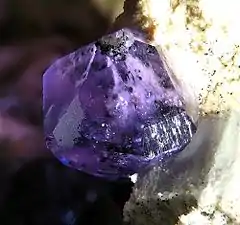 ストレング石の小さな結晶 | |
| シュツルンツ分類 | 8.CD.10 |
| Dana Classification | 40.04.01.02 |
| 化学式 | FePO4 · 2H2O |
| 結晶系 | 直方晶系 |
| 対称 | Pcab |
| モル質量 | 186.85 g/mol |
| 晶癖 | ブドウ房状、放射状、球状(英: spherical) |
| へき開 | {010} 明瞭 {001} 不明瞭 |
| モース硬度 | 3½ - 4 |
| 光沢 | ガラス光沢 |
| 色 | 無色、藤色、パンジー色(英: deep violet)、赤色、カーマイン、緑白色 |
| 条痕 | 白色 |
| 透明度 | 透明もしくは半透明 |
| 比重 | 2.84 |
| 密度 | 2.87 g/cm3 |
| 光学性 | 二軸性 (+) |
| 光軸角 2V | 72° - 88° |
| 分散 | r < v 比較的強い |
| 文献 | [1][2][3] |
| プロジェクト:鉱物/Portal:地球科学 | |
ラベンダー色、ピンク色あるいは紫色を呈し、鉄がアルミニウムに置き換わったバリサイトに似ている[5]。 また低pHかつ低酸化還元電位の条件では部分的に可溶性である[4]。
発見と語源
1877年にヘッセン州ビーバータールのGrube Eleonore鉱山で、August Nies(1854年-1931年)が初めて発見した。Niesの恩師の鉱物学者ヨハン・アウグスト・シュトレング教授(1830年-1897年)に因んで命名された[6]。
出典
- “Strengite Mineral Data”. Webmineral.com. 2011年10月25日閲覧。
- “Strengite mineral information and data”. Mindat.org. 2011年10月25日閲覧。
- “STRENGITE (Hydrated Iron Phosphate)”. 2011年10月25日閲覧。
- Patrick, W. H., Jr.; Gotoh, S.; Williams, B. G. (February 9, 1973), “Strengite Dissolution in Flooded Soils and Sediments”, Science 179 (4073): 564–565, Bibcode: 1973Sci...179..564P, doi:10.1126/science.179.4073.564, PMID 17820817
- Pough, Frederick H.; Peterson, Roger Tory (1997), A Field Guide to Rocks and Minerals, Peterson Field Guide, 7 (5th ed.), Houghton Mifflin Harcourt, p. 239, ISBN 0-395-91096-X
- Senning, Alexander (2007), Elsevier's dictionary of chemoetymology: the whies and whences of chemical nomenclature and terminology, Elsevier, p. 374, ISBN 0-444-52239-5
This article is issued from Wikipedia. The text is licensed under Creative Commons - Attribution - Sharealike. Additional terms may apply for the media files.