テレビ中毒
テレビ中毒(てれびちゅうどく、英: Television addiction)とは、テレビ番組を視聴することに関連した不適応的または強迫的な行動に関連した依存症モデルである[1][2][3]。テレビ中毒者の中にはテレビの視聴時間を減らす事を試みてみたものの実現できなかった人や、テレビを見るのを止めることによって禁断症状の出る人がいる[4]。
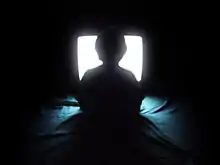
テレビの前でテレビを見ている子どもは、テレビが子どもたちに与える中毒性を物語っている
分析
このモデルに関する最新の医学的レビューでは、病的なテレビ視聴行動は真の行動依存症を構成する可能性があると結論づけたが、これを示すためにはこのトピックに関するさらなる研究が必要であると指摘した[5]。この強迫は、多くの場合、非常に制御しにくいものである。テレビ中毒モデルは、薬物やギャンブルなどの他の形態の行動依存症と類似点があり、それらも強迫的な行動の一種である。
考えられる行動上の影響
- 睡眠問題
- 体を動かさない生活
- 反社会的行動
- 体重増加
- 注意欠陥・多動性障害
出典
- TV Addiction: Characteristics and Treatment : Healthline
- How Viewers Grow Addicted To Television - The New York Times
- Television addiction: Implication for enhancing media literacy for healthy use of technology Manoj Kumar Sharma1, Girish N Rao2, Vivek Benegal3, K Thennarasu4 - Indian Journal of Social Psychiatry
- 中国新聞. “TVなし生活 ~広島市の「実験」から (中)禁断症状”. 2011年5月14日閲覧。
- “Hidden addiction: Television”. J Behav Addict 2 (3): 125–32. (2013). doi:10.1556/jba.2.2013.008. PMC 4114517. PMID 25083294.
- McIlwraith, Robert. “"I', addicted to television": the personality, imagination, and TV watching patterns of self-identified TV addicts”. www.bnet.com. 2011年9月17日閲覧。
外部リンク
- Article by Michael D. Pollock "How I Overcame TV Addiction, Reclaimed My Life and Gained Two Extra Months Per Year"
- Reader's Digest Article
- テレビが消せない-依存を生む心理:日経サイエンス
- TVなし生活 ~広島市の「実験」から (上)ショック療法 ・ (中)禁断症状 ・ (下)時間の使い道 - ウェイバックマシン(2012年2月8日アーカイブ分)
- テレビを消せ! :コ・ジェハク,裵 淵弘 | ポプラ社
| 嗜癖 (アディクション) |
| ||||
|---|---|---|---|---|---|
| 依存 |
| ||||
| 管理 | 認知行動療法 - CRAFT - 動機づけ面接 - 運動療法 - ハーム・リダクション - 依存症専門医療機関 - 自助グループ - 12ステップのプログラム | ||||
| その他 | |||||
 Category:依存症 Category:依存症 | |||||
| |||||||||||||
| 進化のプロセス | |||||||||||||
| 研究分野 | |||||||||||||
| 人物 |
| ||||||||||||
| 研究所・組織 |
| ||||||||||||
| 出版物 |
| ||||||||||||
| 関連項目 | |||||||||||||
| |||||||||||||

This article is issued from Wikipedia. The text is licensed under Creative Commons - Attribution - Sharealike. Additional terms may apply for the media files.