ハチ科
ハチ科(学名:Apistidae)は、カサゴ目に所属する魚類の分類群の一つ。インド洋と西太平洋に分布する[1]。
| ハチ科 | ||||||||||||||||||
|---|---|---|---|---|---|---|---|---|---|---|---|---|---|---|---|---|---|---|
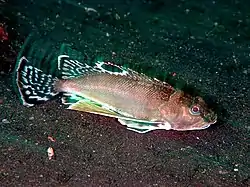 | ||||||||||||||||||
| 分類 | ||||||||||||||||||
| ||||||||||||||||||
| 学名 | ||||||||||||||||||
| Apistidae (Kaup, 1873) | ||||||||||||||||||
| 英名 | ||||||||||||||||||
| Wasp scorpionfish |
分類・名称
1859年にアメリカの魚類学者であるセオドア・ジルによって初めて分類群として認識された[2]。『Fishes of the world(第5版)』ではフサカサゴ科の亜科とされている[3]。目の下の棘から、オニオコゼ科に含まれる事もある[4][5]。英語ではワスプ・スコーピオンフィッシュ(Wasp scorpionfish)とも呼ばれる。
下位分類
本科は3属3種から成る[1]。
- Apistops Ogilby, 1911 パプアニューギニア、アラフラ海、オーストラリアの一種のみ。
- Apistops caloundra (De Vis, 1886)
- ハチ属 Apistus Cuvier, 1829 ハチ一種のみ。
- ハチ Apistus carinatus (Bloch & J. G. Schneider, 1801)
- Cheroscorpaena Mees, 1964 パプア湾の一種のみ。
- Cheroscorpaena tridactyla Mees, 1964
形態
本科魚類は小型で、C. tridactylaで全長15センチメートル (5.9 in) [6]、日本にも生息するハチApistus carinatusでは全長20センチメートル (7.9 in)になる[1]。 胸鰭に1あるいは3本の遊離軟条をもち、鰾は二葉に分かれる[3]。
出典
- Froese, Rainer, and Daniel Pauly, eds. (2024). "Apistidae" in FishBase. February 2024 version.
- Richard van der Laan; William N. Eschmeyer & Ronald Fricke (2014). “Family-group names of Recent fishes”. Zootaxa 3882 (2): 001–230. doi:10.11646/zootaxa.3882.1.1. PMID 25543675.
- J. S. Nelson; T. C. Grande; M. V. H. Wilson (2016). Fishes of the World (5th ed.). Wiley. pp. 468–475. ISBN 978-1-118-34233-6
- Smith, W. Leo; Smith, Elizabeth; Richardson, Clara (February 2018). “Phylogeny and Taxonomy of Flatheads, Scorpionfishes, Sea Robins, and Stonefishes (Percomorpha: Scorpaeniformes) and the Evolution of the Lachrymal Saber”. Copeia 106 (1): 94–119. doi:10.1643/CG-17-669.
- Willingham, AJ (2018年4月13日). “Stonefish are already scary, and now scientists have found they have switchblades in their heads”. CNN
- Mees, G.F. (1964-01). “A new fish of the family Scorpaenidae from New Guinea”. Zoologische Mededelingen 40 (1): 1-4.
This article is issued from Wikipedia. The text is licensed under Creative Commons - Attribution - Sharealike. Additional terms may apply for the media files.