HP 9100A
HP 9100Aは1968年にヒューレット・パッカードが発売したコンピュータあるいはプログラム電卓。同社はこれを卓上計算機と呼んだ。この理由についてビル・ヒューレットは「もしHP 9100Aをコンピュータと呼んだら、それはIBMらしくないという理由で顧客のコンピュータ担当者に断られただろう。そこで私たちは計算機と呼ぶことに決め、そのような戯言は消え去った。」と語っている。[1]
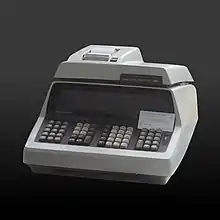
「新しい ヒューレット・パッカード 9100A パーソナルコンピュータ」は「あなたを大型コンピュータの順番待ちから解放することでしょう。」[1]
歴史
本機のプロトタイプはHPがプロジェクトを立ち上げたときに入社してきた技術者のトム・オズボーンによって製作された。[2][3][4]
当時の技術的な功績として、論理回路は集積回路を一切使わずに製作され、CPUは専らディスクリート部品によって構成されていた。CRT、磁気カード記憶、およびプリンターの構成で価格はUS$5,000(2023年時点の$43,809と同等)であった。[5]
9100Aは三角関数、対数関数、指数関数といった現代的な定義での最初の関数電卓で、ヒューレット・パッカードの RPN (逆ポーランド記法) 入力を用いた電卓の長い歴史の始まりであった。ただし、RPN は現在の4レベル RPN ではなく、3レベル RPN という古い方式であった。
磁気カードやアーキテクチャなど、本機はプログラマ101のいくつかの技術を取り入れており、その類似性からヒューレット・パッカードはオリベッティに90万ドルのロイヤルティーを支払った。[6][7]
関連項目
- HP-35
- CORDIC
脚注
- “History of the 9100A desktop calculator, 1968”. Hewlett Packard. 2009年12月18日閲覧。
- “Osborne's Story”. HP9825.com. 2010年5月11日閲覧。
- "How the Model 9100A Was Developed", Bernard M. Oliver, September 1968, Hewlett-Packard Journal]
- 1994 letter from Tom Osborne to Barney Oliver, hp9825.com
- Federal Reserve Bank of Minneapolis Community Development Project. "Consumer Price Index (estimate) 1800–" (英語). Federal Reserve Bank of Minneapolis. 2019年1月2日閲覧。
- “Olivetti Programma P101/P102”. Old Computers. 2010年8月11日閲覧。 “The P101, and particularly the magnetic card, was covered by a United States Patent Office (3,495,222, Perotto et al.) and this gave to Olivetti over $900.000 in royalties by HP alone, for the re-use of this technology in the HP9100 series.”
- Perotto, Pier Giorgio (1970年2月10日). “3,495,222 Program Controlled Electronic Computer” (multiple). United States Patent Office. Google patents. 2010年11月8日閲覧。
外部リンク
- “HP 9100A Calculator (marketing brochure)”. Hewlett Packard (1968年). 2013年1月26日閲覧。 Hosted at the Computer History Museum.
- “HP 9100A/B”. The Museum of HP Calculators. 2013年1月26日閲覧。
- Bell, C. Gordon; Newell, Allen (1971). “Chapter 20: The HP Model 9100A computing calculator”. Computer Structures: Readings and Examples. McGraw-Hill. p. 243. ISBN 0-07-004357-4 2009年12月18日閲覧。
- Steven Leibson interview of Tom Osborne
This article is issued from Wikipedia. The text is licensed under Creative Commons - Attribution - Sharealike. Additional terms may apply for the media files.