ドラゴンフライ (探査機)
ドラゴンフライ (英: Dragonfly) は、ジョンズ・ホプキンズ大学応用物理研究所が提案し、アメリカ航空宇宙局 (NASA) が計画している宇宙機、および原始生命化学と地球外居住可能性の研究のために土星最大の衛星タイタンに着陸機を送り込むミッションの名称[4][5][6]。2019年6月28日、NASAはドラゴンフライをニュー・フロンティア計画の4番目のミッションに選定したと発表した[1]。
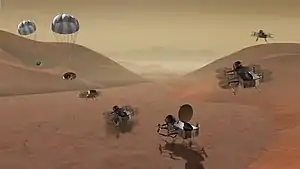 ミッション想像図 | |
| 運用者 | NASA |
|---|---|
| ウェブサイト | dragonfly |
| 任務期間 | 2.7年[1] |
| 特性 | |
| 宇宙機 | ドラゴンフライ (Dragonfly)[1] |
| 着陸時重量 | ≈450 kg (990 lb) [2] |
| 任務開始 | |
| 打ち上げ日 | 2026年(予定)[1] |
| タイタン着陸船 | |
| 着陸 | 2034年[3] |
着陸機は、赤道近くの「シャングリラ」と名付けられた低アルベド地域に着陸し、その後複数のエリアを移動して探査する[1]。8基の回転翼を使って大型のドローンのように垂直離着陸して飛行することができ、2.7年の計画中にタイタンの地表を108マイル(175km)移動して、さまざまな場所を探査する予定[1]。
脚注
- "NASA's Dragonfly Will Fly Around Titan Looking for Origins, Signs of Life" (Press release). アメリカ航空宇宙局. 28 June 2019. 2019年6月30日閲覧。
- Ralph D. Lorenz et al.. Dragonfly: A Rotorcraft Lander Concept for Scientific Exploration at Titan “Dragonfly: A Rotorcraft Lander Concept for Scientific Exploration at Titan”. Johns Hopkins APL Technical Digest (ジョンズ・ホプキンズ大学 応用物理研究所 (APL)) 34 (3): 374-387.
- “Eyes on Titan: Dragonfly Team Shapes Science Instrument Payload”. ジョンズ・ホプキンズ大学 応用物理研究所 (APL) (2019年1月9日). 2019年3月15日閲覧。
- E. P. Turtle; et al. Dragonfly: Exploring Titan's Prebiotic Organic Chemistry and Habitability (PDF). Lunar and Planetary Science Conference 2017. 2019年6月30日閲覧。
- “Dragonfly: Titan Rotorcraft Lander”. ジョンズ・ホプキンズ大学 応用物理研究所 (APL) (2017年). 2019年6月30日閲覧。
- Redd, Nola Taylor (2017年4月25日). “'Dragonfly' Drone Could Explore Saturn Moon Titan” 2019年6月30日閲覧。
関連項目

This article is issued from Wikipedia. The text is licensed under Creative Commons - Attribution - Sharealike. Additional terms may apply for the media files.