ノドサウルス科
ノドサウルス科(ノドサウルスか Nodosauridae)曲竜類恐竜の科であり現在の北アメリカ大陸、アジア、南極大陸、ヨーロッパのジュラ紀後期から白亜紀後に生息していた。 これらの恐竜の化石記録はアメリカ東部、アランデル累層(en)でしばしば発掘され、これには2012年8月に報告されたメリーランド州グリーンベルトのゴダード宇宙飛行センターで発見された足跡化石も含まれる[1]。
| ノドサウルス科 | ||||||||||||||||||||||||||||||||||||
|---|---|---|---|---|---|---|---|---|---|---|---|---|---|---|---|---|---|---|---|---|---|---|---|---|---|---|---|---|---|---|---|---|---|---|---|---|
 | ||||||||||||||||||||||||||||||||||||
| 地質時代 | ||||||||||||||||||||||||||||||||||||
| ジュラ紀後期 - 白亜紀後期 | ||||||||||||||||||||||||||||||||||||
| 分類 | ||||||||||||||||||||||||||||||||||||
| ||||||||||||||||||||||||||||||||||||
| 学名 | ||||||||||||||||||||||||||||||||||||
| Nodosauridae Marsh, 1890 | ||||||||||||||||||||||||||||||||||||
| シノニム | ||||||||||||||||||||||||||||||||||||
| 下位分類 | ||||||||||||||||||||||||||||||||||||
|
本文参照 |
特徴
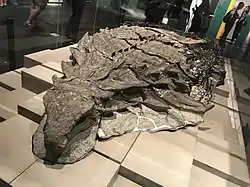
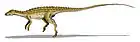
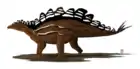
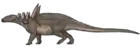
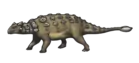
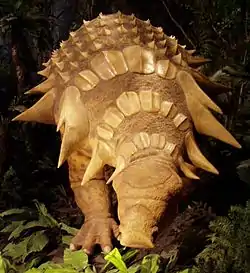
ノドサウルス科を識別する特徴には以下のものが含まれる:眼窩の上の突起が丸みを帯びていること、後頭顆(en)が基後頭骨のみから派生していること、前上顎骨(en)の上にオーナメントが存在することである。4つ目のあいまいな特徴がある:肩峰(en)がノブのような突起である。全てのノドサウルス科は、他の曲竜類のように中型から大型サイズであると記述でき、重厚な作りの四足歩行の草食恐竜で、小さな小鋸歯上の歯をもち、体の背面の表面に傍矢状の皮骨(en)の列(ある種の装甲)を持つ。
また、ノドサウルスの仲間は水辺を好んでいました[4]。
分類
分類学
ノドサウルス科は1890年、オスニエル・チャールズ・マーシュにより作られ、ノドサウルス属に基づいている。後述の分類は断りが無い限りThompson et al., 2011に拠る[5]。
- ノドサウルス科
- ?アレトペルタAletopelta (北アメリカ西部、カリフォルニア州)[6]
- アニマンタルクスAnimantarx (北アメリカ西部、ユタ州)
- アノプロサウルスAnoplosaurus (ヨーロッパ北西部、イングランド)
- アンタルクトペルタAntarctopelta (南極半島北西部、ジェイムズ・ロス島)
- エドモントニアEdmontonia (北アメリカ西部、アルバータ州)
- グリプトドントペルタGlyptodontopelta (北アメリカ西部、ニューメキシコ州)[6]
- ハンガロサウルスHungarosaurus (ヨーロッパ中南部、ハンガリー )
- ヒラエオサウルスHylaeosaurus (イングランド南部、サセックス州)
- ミモオラペルタMymoorapelta (北アメリカ中部、コロラド州)
- ニオブララサウルスNiobrarasaurus (北アメリカ西部、カンザス州)
- ノドサウルスNodosaurus (北アメリカ西部、ワイオミング州およびカンザス州)
- パノプロサウルスPanoplosaurus (北アメリカ西部、モンタナ州およびアルバータ州
- パウパウサウルスPawpawsaurus (北アメリカ西部、テキサス州)
- プロパノプロサウルスPropanoplosaurus (北アメリカ東部、メリーランド州)
- サウロペルタSauropelta (北アメリカ西部、ワイオミング州およびモンタナ州)
- シルヴィサウルスSilvisaurus (北アメリカ西部、カンザス州)
- ステゴペルタStegopelta (北アメリカ西部、ワイオミング州)
- ストルティオサウルスStruthiosaurus (ヨーロッパ中南部)
- タタンカケファルスTatankacephalus (北アメリカ西部、モンタナ州)
- テクサセテスTexasetes (北アメリカ西部、テキサス州
- チェジアンゴサウルスZhejiangosaurus (中国東部、浙江省)
- エウロペルタEuropelta (スペイン東部、アラゴン州テルエル県)[7]
- ポラカントゥス亜科Polacanthinae[8]
- ガルゴイレオサウルスGargoyleosaurus (北アメリカ西部、ワイオミング州)
- ガストニアGastonia (北アメリカ西部、ユタ州)
- ホプリトサウルスHoplitosaurus (北アメリカ中部、サウスダコタ州)
- ペロロプリテスPeloroplites (北アメリカ西部ユタ州)
- ポラカントゥスPolacanthus (イングランド南部、ワイト島およびサセックス州)
- ノドサウルス科の疑問名numen dubium
- アカントフォリスAcanthopholis (ヨーロッパ西部、イギリス)
- パラエオスキンクスPalaeoscincus
系統
クレード(en)としてのノドサウリダエは1998年にポール・セレノ(en) により初めて「アンキロサウルスよりパノプロサウルスに近縁なアンキロサウリアとして定義され、Vickaryous, MaryanskaおよびWeishampelによる2004年の定義が続いた。Vickaryous他はノドサウリダエの2つの属がincertae sedisになることを考慮した:ストルティオサウルスとアニマンタルクス、そしてノドサウリダエのもっとも原始的なメンバーがケダルペルタ(Cedarpelta)になることを考慮した。[9] 下記のクラドグラム(en)は古生物学者Richard S. Thompson, Jolyon C. Parish, Susannah C. R. Maidment、およびPaul M. Barrettによる2011年の解析の結果得られた最も決定的な樹形である。[5] ポラカンティナエ(en)の位置は ケネス・カーペンター(en)による2011年のオリジナルの定義に拠る[8]。
| Nodosauridae |
| |||||||||||||||||||||||||||||||||||||||||||||||||||||||||||||||||||||||||||||||||||||||||||||||||||||||||||||||
参照
- Gast, Phil. “Apparent dinosaur track found where scientists reach for the stars”. CNN.com. 2012年8月21日閲覧。
- Recently Discovered Dinosaur ‘Mummy’ Is So Well-Preserved It Even Has The Skin And Guts Intact
- 奇跡の恐竜化石、世紀の大発見 写真18点
- 『「もしも?」の図鑑 恐竜の飼い方』実業之日本社、9月27日 2018、83頁。
- Richard S. Thompson, Jolyon C. Parish, Susannah C. R. Maidment and Paul M. Barrett (2011). “Phylogeny of the ankylosaurian dinosaurs (Ornithischia: Thyreophora)”. Journal of Systematic Palaeontology 10 (2): 301-312. doi:10.1080/14772019.2011.569091.
- Burns, Michael E. (2008). “Taxonomic utility of ankylosaur (Dinosauria, Ornithischia) osteoderms: Glyptodontopelta mimus Ford, 2000: a test case”. Journal of Vertebrate Paleontology 28 (4): 1102–1109. doi:10.1671/0272-4634-28.4.1102.
- http://www.plosone.org/article/info%3Adoi%2F10.1371%2Fjournal.pone.0080405
- Carpenter K (2001). “Phylogenetic analysis of the Ankylosauria”. In Carpenter, Kenneth(ed). The Armored Dinosaurs. Indiana University Press. pp. 455–484. ISBN 0-253-33964-2
- Vickaryous, M. K., Maryanska, T., and Weishampel, D. B. (2004). Chapter Seventeen: Ankylosauria. in The Dinosauria (2nd edition), Weishampel, D. B., Dodson, P., and Osmólska, H., editors. University of California Press.
- Carpenter, K. (2001). "Phylogenetic analysis of the Ankylosauria." In Carpenter, K., (ed.) 2001: The Armored Dinosaurs. Indiana University Press, Bloomington & Indianapolis, 2001, pp. xv-526
- Osi, Attila (2005). Hungarosaurus tormai, a new ankylosaur (Dinosauria) from the Upper Cretaceous of Hungary. Journal of Vertebrate Paleontology 25(2):370-383, June 2003.
| ||||||||||||||||||||||||||||||||||||||||||
| ||||||||||||||||||||||||||||||||||||||||||
| ||||||||||||||||||||||||||||||||||||||||||