ワハン人
ワハン人はアフガニスタン北東部とタジキスタン南東部のバダフシャーン地方のワハーンの民族である。タジキスタン、中国新疆ウイグル自治区、パキスタンのワハーンの近隣地域やパキスタンのチトラル地区やゴジャルにもいる[3][4]。 ワハーン人、ワヒ人、ワヒー人、ヒク人、ワハニ、ワハーニー、ワーハーニー、ワヒ、ワヒー、ヒクとも呼ぶ。ワハニ、ワハーニー、ワーハーニー、ワヒ、ワヒーはワハーンが由来である。また、パキスタンのゴジャルではゴジャル人、グジャリとも呼ぶ。グジャリとはゴジャルの人という意味である。ワハン人はワハン語を話す。
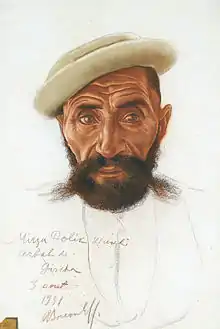 ワハン人の肖像画 | |
| 総人口 | |
|---|---|
| 約7万~10万人[1][2] | |
| 居住地域 | |
 アフガニスタン アフガニスタン | 不明 |
 中国 中国 | 不明 |
 パキスタン パキスタン | 不明 |
 タジキスタン タジキスタン | 不明 |
| 言語 | |
| ワハーン語 | |
| 宗教 | |
| イスラム教シーア派イスマーイール派ニザール派、民族宗教 | |
ワハン人はアフガニスタンでは公的にはパミール人と呼ばれ、中華人民共和国では公的にはタジク族とみなしている。タジキスタンでも公的にはタジク人とされているが、ワハン人自身はパミール人と考えていて、パキスタンではワハン人自身はパミール人でゴジャル人と考えている。
宗教はイスラム教シーア派イスマーイール派ニザール派と民族宗教である[2][5] 。
ワハン人は主にヤクと馬の群れに依存した遊牧生活を送っている.[6] 。夏の住居と冬の住居というように2つの住居を持っているものもいて、家は石と芝で建てる[6]。
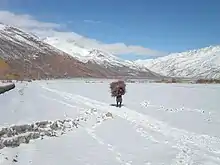
うっすら雪が積もるワハン回廊で薪を集めているワハン人男性。
脚注
- Coates, Ken (2004). A global history of indigenous peoples: Struggle and survival. New York: Palgrave MacMillan, ISBN 1403939292
- West, Barbara (2008). Encyclopedia of the peoples of asia and oceania. Facts on File, ISBN 0816071098
- “Distribution of Wakhi Ethnic Group”. Gojal.net. 2007年2月23日時点のオリジナルよりアーカイブ。2007年2月23日閲覧。
- Phillips, David J. (2001) Peoples on the Move: introducing the nomads of the world Piquant, Carlisle, p. 271, ISBN 1-903689-05-8
- Shahrani, M. Nazif Mohib (2002) The Kirghiz and Wakhi of Afghanistan University of Washington Press, Seattle, p. 216, ISBN 0-295-98262-4
- “Khyber Pakhtunkhwa: People and Tribes”. Government of the Khyber Pakhtunkhwa. 2015年3月16日時点のオリジナルよりアーカイブ。2015-03-16 閲覧。
参考文献
- Felmy, Sabine (1996) The Voice of the Nightingale: A Personal Account of the Wakhi Culture in Hunza Oxford University Press, New York, ISBN 0-19-577599-6.
- Shahrani, M. Nazif. (1979) The Kirghiz and Wakhi of Afghanistan: Adaptation to Closed Frontiers and War University of Washington Press, Seattle, ISBN 0-295-95669-0; 1st paperback edition with new preface and epilogue (2002), ISBN 0-295-98262-4.
外部リンク
- Wakhi Tajik Culture Association website
- Hermann Kreutzmann (2003) Ethnic minorities and marginality in the Pamirian Knot
- Photos From Afghanistan: Natural Beauty, Not War - slideshow by NPR

This article is issued from Wikipedia. The text is licensed under Creative Commons - Attribution - Sharealike. Additional terms may apply for the media files.