グク
グㇰ(クㇰとも:guk)またはタン(湯、tang)は、朝鮮料理のスープである。グㇰとタンは同じ種類の料理とみなされるが、濃度の濃いものをタンという場合もある[1][2]。パッ(飯)及びパンチャン(副菜)とともに、朝鮮料理の最も基本の構成の1つである[3][4]。朝鮮料理のテーブルセッティングでは、グㇰはパッの右側、スジョ(スプーンと箸)の左側に置く。
| グㇰ | |
|---|---|
.jpg.webp) Soegogi-mu-guk (牛肉と大根のスープ) | |
| 別名 | タン |
| 種類 | スープ |
 ウィキメディア・コモンズ ウィキメディア・コモンズ | |
| 朝鮮語表記 | |
|---|---|
| 各種表記 | |
| ハングル: |
국 탕 |
| 漢字: |
- 湯 |
| RR式: |
guk tang |
| MR式: |
kuk t'ang |
| IPA: |
[kuk̚] [tʰaŋ] |
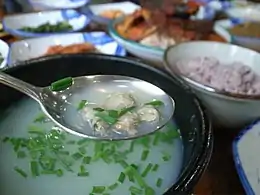
貝のグㇰ
.jpg.webp)
キュウリとワカメの冷たいグㇰ
一般的に、野菜の軽いスープには「グㇰ」、ヨンポタン(タコのスープ)、テグタン(タラのスープ)等のように[2][5]固体の具材が入ったより重く濃いスープには「タン」が用いられる[1][2]。カムジャグクとカムジャタン(豚の背骨とジャガイモを煮込んだ鍋)は別の料理であり、ジャガイモのスープはカムジャグクと呼ばれる[5][6][7]。
タイプ
グㇰは大きく、マルグンジャングク、コムグク、トジャングク、ネングクの4つのタイプに分類される。マルグンジャングクは、「調味料(醤)で味付けした透明なスープ」という意味であり、肉、魚、野菜、魚介等を具材とする。コムグㇰまたはコムタンは、あばら、尾、胸肉、頭、骨等の牛の様々な部位を長時間茹でて作り、牛乳のような色で豊かな味わいになる。鶏や豚の骨で作ることもあり、サムゲタンやカムジャタンとなる。トジャングㇰは、テンジャンと米のとぎ汁で作り、ピリッとして深い味になる。ネングクは夏に食べる冷たいスープであり、透明でピリッとする。また、クッパはクㇰとパッを合わせた語である。
出典
- “guk” (朝鮮語). Standard Korean Language Dictionary. National Institute of Korean Language. 2017年4月22日閲覧。
- “tang” (朝鮮語). Standard Korean Language Dictionary. National Institute of Korean Language. 2017年4月22日閲覧。
- Pettid, Michael J. (2008). Korean Cuisine: An Illustrated History. London: Reaktion Books. pp. 55-57. ISBN 978-1-86189-348-2
- “kuk, t'ang” (朝鮮語). Chosŏn ryori. Korean Association of Cooks. 2017年4月22日閲覧。
- 최, 용기 (2008年2月25日). “‘국’과 ‘탕’” (Korean). Hangul sarang, Seoul sarang. Seoul Metropolitan Government. 2013年4月2日時点のオリジナルよりアーカイブ。2008年5月26日閲覧。
- “gamja-guk” (朝鮮語). Standard Korean Language Dictionary. National Institute of Korean Language. 2017年4月22日閲覧。
- “gamja-tang” (朝鮮語). Standard Korean Language Dictionary. National Institute of Korean Language. 2017年4月22日閲覧。
関連文献
外部リンク
- Soups and stews from Food in Korea
| スープ |
|
|---|---|
| ブラッドスープ |
|
| 豆のスープ |
|
| チーズのスープ |
|
| クリームスープ、及び ヨーグルトスープ | |
| フルーツスープ |
|
| 麺料理 |
|
| ナッツのスープ |
|
| 野菜スープ |
|
| 関連項目 | |
| |


This article is issued from Wikipedia. The text is licensed under Creative Commons - Attribution - Sharealike. Additional terms may apply for the media files.